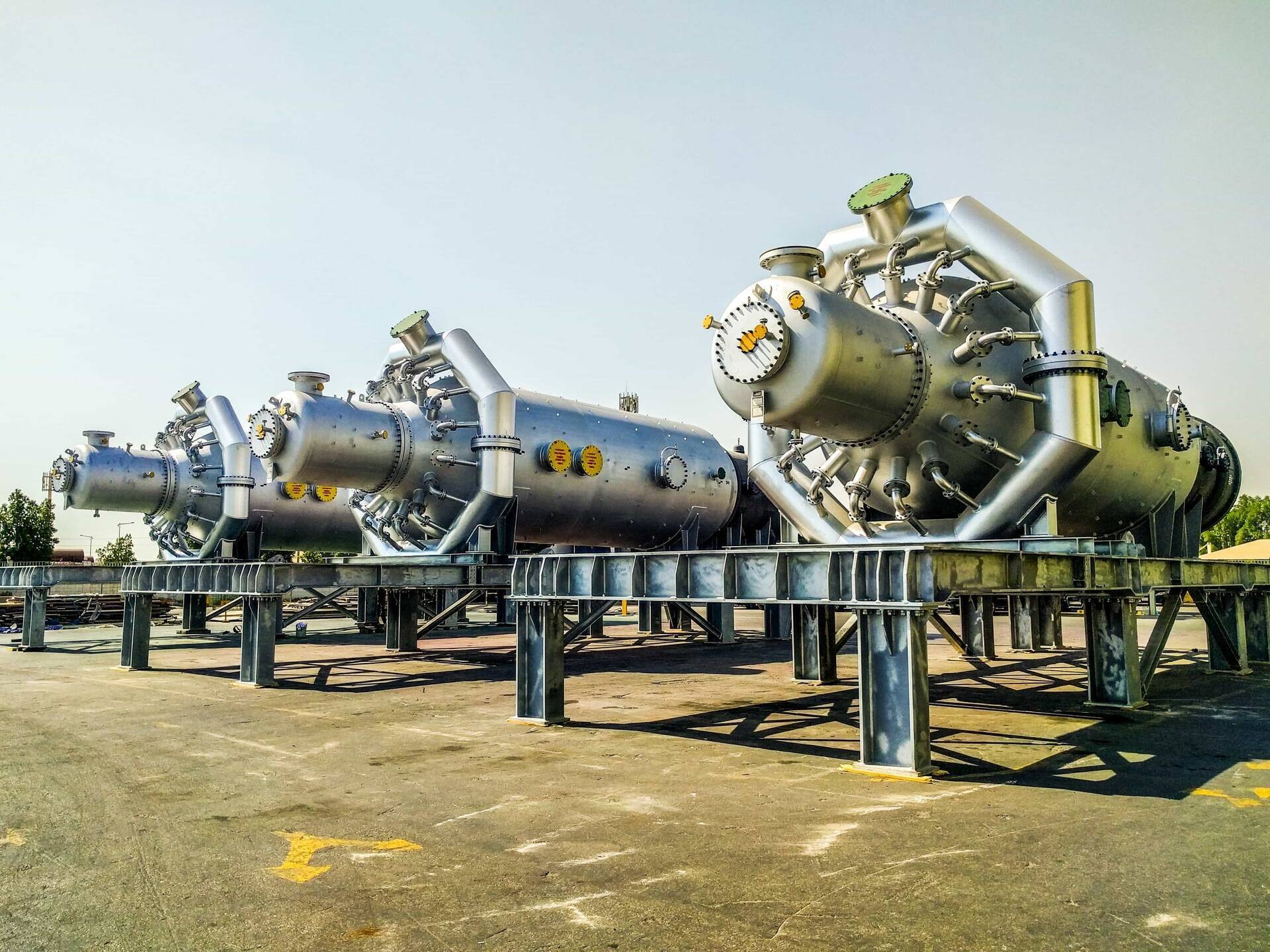
CE marking for boilers done! With easyCE expert support.


Identify the efficiency and conformity requirements that apply to your boiler. easyCE helps distinguish the retained provisions of Directive 92/42/EEC from current ecodesign and gas-appliance requirements. We review the assessment route and organise the technical evidence, documentation and declarations your product needs.
Willy Lebherz
Founder and Managing Director of easyCE GmbH
DoC ready to sign!
Receive the declaration for your review and signature once the required assessment and evidence are complete.
Risk assessment completed!
Identify product hazards, assess risks and document the necessary protective measures.
Applicable standards identified!
We identify the relevant harmonised standards and test methods for your boiler, checking their scope and references against the applicable regulatory framework.
Technical documentation prepared!
Bring the assessment, supporting evidence and product instructions together in a structured technical file.
CE marking prepared!
Clarify the marking and information your product needs before it is placed on the market.
Boiler efficiency requirements. The essentials.
Requirements at a glance
Directive 92/42/EEC established efficiency requirements for new hot-water boilers fired with liquid or gaseous fuels. Much of it was repealed by Regulation (EU) No 813/2013, while specified conformity assessment provisions were retained. It should not be presented as a complete standalone current framework.
Regulation (EU) No 813/2013 sets ecodesign requirements for space heaters and combination heaters with a rated heat output of up to 400 kW, subject to its exclusions. Gas Appliances Regulation (EU) 2016/426 and other product legislation may also apply. The correct combination depends on the product’s design, fuel and intended use.
easyCE reviews the product scope, identifies the applicable requirements and coordinates the documentation needed to demonstrate conformity. We connect efficiency evidence, safety assessment and product information so that the technical file reflects the actual boiler and assessment route.
Frequently asked questions
What did the Boiler Efficiency Directive cover?
Directive 92/42/EEC established efficiency requirements for new hot-water boilers fired with liquid or gaseous fuels. Its original scope concerned boilers rated from 4 kW to 400 kW.
Most of the directive was repealed by Regulation (EU) No 813/2013. Articles 7(2) and 8 and Annexes III to V were retained. Current projects must identify the relevant ecodesign and other product requirements rather than apply the former directive unchanged.
Which other rules are relevant?
Regulation (EU) No 813/2013 sets ecodesign requirements for space heaters and combination heaters. Separate energy-labelling provisions and, for gas appliances, Regulation (EU) 2016/426 may also apply.
The broader ecodesign framework is now Regulation (EU) 2024/1781, with transitional provisions preserving existing implementing measures. The old references to a 2020 energy-efficiency target do not describe a current product-conformity procedure.
What does CE marking mean for a boiler?
CE marking indicates the manufacturer’s responsibility for compliance with the applicable EU legislation that requires it. It is not a general certificate of efficiency or an approval issued by easyCE.
The technical assessment must establish which requirements apply to the particular boiler, including efficiency, safety and other relevant aspects. The declaration should identify the correct legal framework.
Does CE marking guarantee that a boiler can be installed anywhere?
No. Product conformity and national rules governing buildings, installation and use are different matters.
A CE-marked product must still be suitable for its intended application. Assess the relevant installation conditions and national requirements without assuming that CE marking overrides them.
What was the original product scope of Directive 92/42/EEC?
The original scope covered new hot-water boilers fired with liquid or gaseous fuels, with a rated output of at least 4 kW and no more than 400 kW.
It distinguished standard boilers, low-temperature boilers and gas condensing boilers. Personal protective equipment has no place in this scope; references to hearing protection or protective clothing were copied from an unrelated product category.
Which exclusions need to be checked?
The original directive excluded specified products, including multi-fuel boilers using solid fuels, instantaneous water heaters and certain specially designed or one-off boilers.
For a current assessment, use the exclusions of the legislation actually applicable to the product. Regulation (EU) No 813/2013 has its own scope and exclusions, including specified biomass-fuelled heaters, solid-fuel heaters and products used only to provide hot drinking or sanitary water. An exclusion from one measure does not mean exemption from all product legislation.
What does boiler efficiency measure?
Efficiency relates useful heat output to the energy input. A more efficient product provides the required useful heat with less energy input under the specified test conditions.
Distinguish useful efficiency at a stated load from seasonal space-heating efficiency. The applicable regulation defines the calculation and operating conditions used for conformity assessment.
What is cogeneration?
Cogeneration produces useful heat and electricity in the same process.
A cogeneration space heater has specific definitions and assessment requirements under the relevant ecodesign measure. It should not be assessed as an ordinary boiler solely because it supplies heat.
What is a space heater?
Under Regulation (EU) No 813/2013, a space heater supplies heat to a water-based central heating system to maintain an indoor temperature and contains one or more heat generators.
The definition covers more than fuel-fired boilers. Electrical boilers, heat pumps and cogeneration products have their own relevant requirements.
What is a combination heater?
A combination heater provides space heating and also supplies hot drinking or sanitary water from an external water supply.
Its assessment therefore needs to address both functions under the applicable requirements, rather than treating hot-water performance as irrelevant.
Who carries out the conformity assessment?
The manufacturer is responsible for product conformity. The applicable legislation and product type determine which assessment tasks require a notified body.
easyCE supports the scope review, technical assessment and documentation. We do not replace a notified body where independent assessment is required, and an importer does not automatically take over every manufacturer duty.
Which efficiency limits apply today?
Use the current limits and calculation methods in the applicable product regulation, including the relevant heater type, rated output, operating conditions and exceptions.
The former Article 5 formulae in Directive 92/42/EEC are historical requirements, not a universal current pass criterion. Regulation (EU) No 813/2013 distinguishes seasonal efficiency and useful-efficiency requirements for different heater categories. Test results must be evaluated against the correct category and version of the measure.
How are combination-heater functions assessed?
Space-heating and water-heating performance must be considered under the applicable current requirements.
The former boiler directive’s efficiency provisions focused on the heating function. That historical distinction should not be used to omit water-heating requirements from a current combination-heater assessment.
How is the assessment route selected?
Identify the boiler’s fuel, design, output and intended purpose, then map the applicable legislation and conformity assessment procedures.
The retained boiler-directive provisions include type examination and production-conformity arrangements. Gas-fired appliances also require the applicable GAR procedure. Do not reuse the repealed Gas Appliances Directive 2009/142/EC as the default route for a new product.
What applies to gas-fired boilers?
Where the boiler falls within the Gas Appliances Regulation, its GAR conformity assessment involves a notified body.
For series production, Module B EU type-examination is combined with Module C2, D, E or F. Module G unit verification is an alternative for a single unit or small quantities. Separate applicable ecodesign requirements must also be demonstrated.
What is needed for a type-examination application?
The submission identifies the manufacturer and applicant, describes the product and includes the technical evidence required by the relevant procedure.
The application normally includes a declaration that the same application has not been lodged with another notified body and representative specimens where required. Agree the exact submission requirements with the body for the selected legal route.
What belongs in the technical documentation?
The technical documentation must make the product and its conformity evidence understandable and traceable.
- Product description, intended use and identification.
- Design and manufacturing drawings, diagrams and explanations.
- Applicable requirements and standards or alternative specifications.
- Risk assessment and protective measures where required.
- Efficiency calculations, examinations and test reports.
- Installation instructions, operating information and the relevant declaration.
What does the notified body assess?
The notified body performs the tasks set out in the selected procedure, such as reviewing technical documentation, examining the representative type and evaluating the supporting evidence.
It issues the relevant certificate only if the applicable conditions are met. The scope of the certificate and any conditions must be understood before the product moves to the next assessment or production stage.
What remains after type examination?
Type examination is not the end of the conformity process. The manufacturer must complete the required production-conformity arrangements, issue the appropriate declaration and apply the required marking.
Maintain controls so that production remains consistent with the assessed design. Product changes, certificate conditions, documentation retention and the requirements of every applicable legal act must be managed throughout the product’s supply lifecycle.
Trusted by leading businesses. Chosen for results.













Your compliance project. Expertly handled.
Scroll horizontally to compare the options.
Approach to CE marking
Flexibility of support
Scope of support
Project contact
A clear, practical approach to CE marking
Our experts guide you through CE marking, with support tailored to your needs
Choose the support you need: the full CE marking process or help with individual steps
From the start, you have a dedicated CE expert to support you throughout the process
Other CE service providers
Approach and project fit depend on the provider
Processes and flexibility depend on the provider
Scope agreed with the provider
Contact arrangements agreed for the project
CE software
A standardised workflow that your team adapts to the project
Your team manages the software and carries out the assessment
Features depend on the software and the modules purchased
Technical project support may require an additional service
Expertise that moves your project forward.
Successful projects. Results that speak for themselves.
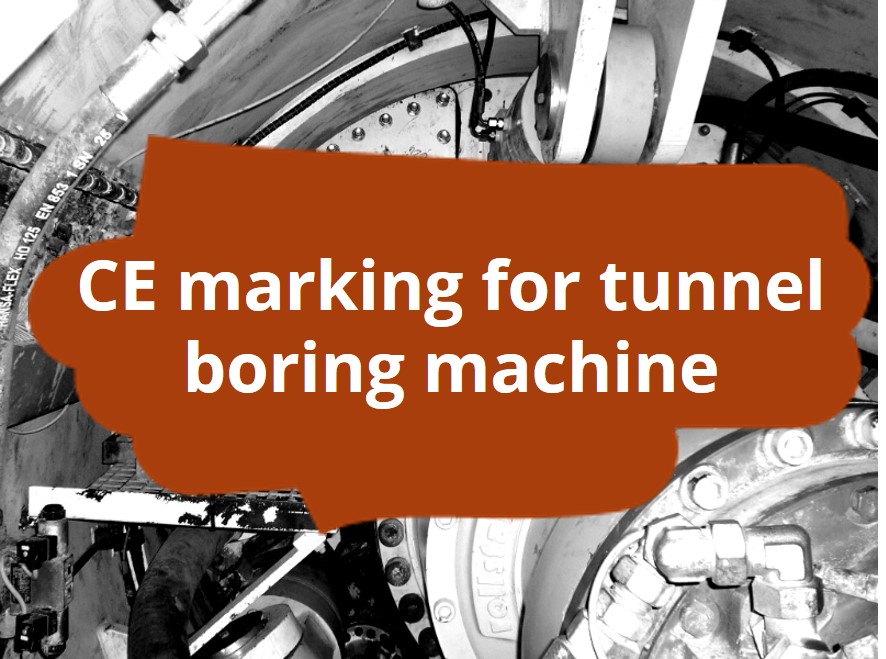
CE marking for a tunnel boring machine used in Australian copper mining
easyCE carries out the conformity assessment for a tunnel boring machine, including risk assessment across its lifecycle and preparation of a declaration of conformity ready to sign. The assessment focused on the new multi-arm cutting-head concept. The work also considered the applicable Australian safety and technical requirements, in close cooperation with the manufacturer and its Australian customer.
CE marking for control cabinets
easyCE supports the conformity assessment for control cabinets, including risk assessment and preparation of a declaration of conformity ready to sign. The assessment considered the Machinery, EMC and Low Voltage Directives, alongside DIN EN 60204-1:2019-06 and DIN EN IEC 61439-1:2021-10. The work also included a checklist to help select suppliers and components that meet the project's specific requirements.
CE marking for a mobile satellite communications system
easyCE supports the conformity assessment of a mobile satellite communications system, including risk assessment, EMC review and preparation of a declaration of conformity ready to sign. The system routes TCP/IP data redundantly through two or more satellite antennas. It is designed for rapid deployment where a mobile communications link is needed over long distances.
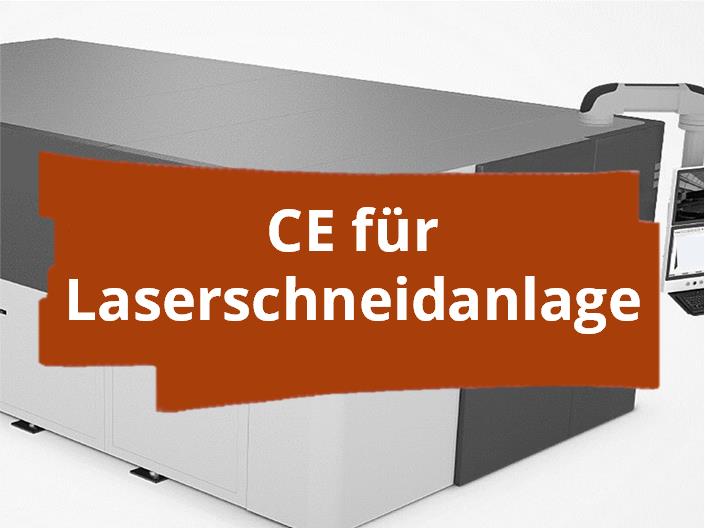
CE marking and declaration of conformity for a 2D laser cutting system
easyCE supports the full conformity assessment for a 2D laser cutting system with an automatic pallet changer. The work included coordinating the safety concept and two-beam light barrier, determining the performance level, analysing the product and carrying out a risk assessment in accordance with EN ISO 12100. Particular attention was needed for the cutting head's support structure and the movements of the pallet changer and cutting head. Laser protection screens, safety devices and a complete enclosure shield operators from the Class 4 laser cutting process inside the cabin, with Class 1 laser conditions outside the machine.
Explore more of our work in the easyCE project portfolio.
Expert support in three clear steps
Step 1
Free initial advice
Describe your product and tell us where you need support. We clarify the applicable requirements and the next steps in a free initial discussion.
Step 2
A clear project proposal
Receive a proposal with a defined scope, deliverables and responsibilities. Your easyCE expert explains the assessment process and the evidence your project needs.
Step 3
Expert delivery
Your dedicated expert coordinates the agreed assessment, documentation and supporting tasks. You receive a structured handover, with any remaining actions clearly identified.
Your compliance project. Expertly handled.
Engineering expertise you can rely on

Willy Lebherz, Founder and Managing Director of easyCE
- Expert in product safety and compliance, since 1995
- Recipient of the "Medal of the Order of Merit of the Federal Republic of Germany", awarded in 1983 by the then Federal President Carl Carstens
- Meister qualification in measurement and control technology
- Captain (ret.), Project Officer for Technical Logistics in the Army Material Office and Chief of the Telecommunications Repair Company
easyCE specialises in product safety and conformity assessment. We combine engineering expertise with digital tools to help manufacturers, machinery users and distributors bring compliant products to market. From risk assessment and identifying relevant standards to technical documentation and test coordination, we carry out the work your project needs. You can choose support for the full process or individual tasks, with a dedicated CE expert as your point of contact. Founded in southern Germany, we work with customers worldwide.
We understand the requirements that apply to your product and can help you work through them.