
CE marking for in vitro diagnostic devices done! With easyCE expert support.


Understand the IVDR requirements for your diagnostic device. easyCE helps clarify classification, identify gaps in the technical documentation and connect performance evidence with the applicable requirements. Get structured support for risk management, conformity assessment preparation and a controlled documentation handover.
Willy Lebherz
Founder and Managing Director of easyCE GmbH
DoC ready to sign!
Receive the declaration for your review and signature once the required assessment and evidence are complete.
Risk assessment completed!
Identify product hazards, assess risks and document the necessary protective measures.
Applicable standards identified!
We identify the relevant harmonised standards and check their scope, current references and any restrictions for your product.
Technical documentation prepared!
Bring the assessment, supporting evidence and product instructions together in a structured technical file.
CE marking prepared!
Clarify the marking and information your product needs before it is placed on the market.
In Vitro Diagnostic Medical Devices Regulation. The essentials.
Requirements at a glance
Regulation (EU) 2017/746, the IVDR, has applied since 26 May 2022. It replaced Directive 98/79/EC and introduced Classes A to D, stronger performance-evaluation requirements and greater notified-body involvement. Certain legacy devices benefit from conditional transitional periods.
The intended purpose determines whether a product is an in vitro diagnostic medical device and how it is classified. General laboratory equipment is not automatically an IVD. Class A non-sterile devices normally use manufacturer self-assessment, while sterile Class A devices require notified-body involvement for sterility aspects.
easyCE helps structure the technical documentation and assessment plan, with clear links between requirements, risks and supporting performance evidence. We coordinate the agreed documentation tasks with your team and relevant specialists, without replacing the manufacturer’s responsibilities or the notified body’s assessment.
Frequently asked questions
Which rules applied before the IVDR?
Directive 98/79/EC was the former framework for in vitro diagnostic medical devices. The separate AIMDD 90/385/EEC and MDD 93/42/EEC covered other medical devices.
The MDR replaced the AIMDD and MDD from 26 May 2021. The IVDR replaced the IVD directive from 26 May 2022, with conditional transitional arrangements for eligible legacy devices.
What are the current IVDR transitional periods?
The IVDR has applied since 26 May 2022. Eligible legacy devices can continue under Article 110 until the relevant conditional transition ends; this is not an extension for all new devices.
- Devices covered by qualifying IVDD certificates and eligible Class D devices: 31 December 2027.
- Eligible Class C devices: 31 December 2028.
- Eligible Class B and Class A sterile devices: 31 December 2029.
Conditions include continued IVDD conformity, no significant design or intended-purpose change, no unacceptable risk, and an IVDR quality management system by 26 May 2025. Notified-body application deadlines are 26 May 2025 for Class D, 26 May 2026 for Class C and 26 May 2027 for Class B and Class A sterile, followed by the corresponding written-agreement deadline of 26 September. Check the actual device’s certificate and transition eligibility.
What is an in vitro diagnostic medical device?
An IVD is a medical device intended to examine specimens from the human body to provide information, for example about a physiological or pathological condition, a predisposition to disease or the response to treatment.
The definition includes reagents, kits, calibrators, control materials, instruments, software and systems, as well as specimen receptacles. Examples include diagnostic test kits, blood glucose test systems and analysers with an IVD intended purpose. General laboratory or research-use products are not automatically IVDs.
How did the IVDD classify devices?
The former IVDD distinguished Annex II List A devices, Annex II List B devices, devices for self-testing and other IVDs.
This was not the current A-to-D risk classification. Notified-body involvement depended on the former category and procedure. When reviewing a legacy device, document both its former IVDD status and its classification under the IVDR.
How does the IVDR classify devices?
The IVDR uses Classes A, B, C and D, with Class D representing the highest risk. Apply the rules in Annex VIII to the device’s intended purpose.
Classes B, C and D require notified-body involvement. Class A non-sterile devices generally use manufacturer self-assessment; for Class A sterile devices, notified-body involvement is limited to the aspects concerning sterility.
Which devices are Class D?
Class D includes specified tests associated with high public-health risks and certain blood-grouping or tissue-typing uses under Rules 1 and 2.
Examples include tests for transmissible agents in blood or tissues intended for transfusion or transplantation and specified tests for life-threatening transmissible agents. ABO, Rhesus, Kell, Kidd and Duffy blood-grouping purposes are addressed by Rule 2. Classification depends on the exact intended purpose, not simply whether a disease is serious.
Which devices are Class C?
Class C includes several higher-risk diagnostic purposes listed in Annex VIII, such as companion diagnostics, human genetic testing and specified cancer or infectious-disease testing.
Devices for self-testing are generally Class C, except for the specific Class B exceptions. Near-patient testing is classified in its own right; it is not automatically one class.
Which devices are Class B?
Class B includes devices not covered by the other classification rules and controls without an assigned quantitative or qualitative value.
The self-testing exceptions include pregnancy and fertility tests, cholesterol tests and tests for glucose, erythrocytes, leucocytes or bacteria in urine. These are diagnostic tests, not self-medication products.
Which devices are Class A?
Class A includes certain IVD laboratory products and accessories without critical characteristics, instruments specifically intended for IVD procedures and specimen receptacles.
An IVD intended purpose is essential. General laboratory equipment does not enter the IVDR merely because it is used in a laboratory. Class A sterile devices still require notified-body involvement for sterility aspects.
What does classification change for manufacturers?
Classification determines the conformity assessment route and the extent of notified-body involvement. It also affects reporting and evidence requirements.
Record the applicable rules and the reasoning behind the classification. The assessment should begin before the documentation and test programme are fixed, so the necessary evidence is planned from the outset.
What are the main IVDR implementation challenges?
The central tasks are classification, performance evaluation, risk management, technical documentation, quality management, traceability and post-market surveillance.
easyCE helps identify documentation gaps, assign evidence to the applicable requirements and prepare a clear assessment plan. Labels, packaging information and instructions must remain consistent with the intended purpose and supported performance claims.
What should IVDR technical documentation demonstrate?
It must show that the device meets the applicable general safety and performance requirements. Annexes II and III define the required technical and post-market surveillance documentation.
The file should explain the design, intended purpose, manufacturing controls, risk management and performance evidence. Claims must be supported by suitable scientific validity, analytical performance and clinical performance evidence, as applicable.
How long must the technical documentation be kept?
Manufacturers must keep the technical documentation, EU declaration of conformity and relevant certificates available for at least ten years after the last device covered by the declaration has been placed on the market.
Use controlled access, versioning and a reliable retrieval process. Retention should preserve the evidence for each device version, not merely the most recently edited file.
What are the general safety and performance requirements?
The general safety and performance requirements, or GSPRs, are set out in Annex I to the IVDR. They cover the device’s safety, performance, design and information supplied to users.
Create a requirements matrix stating which provisions apply and where the supporting evidence is held. These are regulatory requirements, not optional general principles.
What is UDI?
Unique Device Identification supports device identification and traceability. The Basic UDI-DI identifies a device model group in regulatory documentation; the UDI-DI and UDI-PI identify the device and relevant production information.
Apply the requirements and implementation dates relevant to the device class and its regulatory status. The Basic UDI-DI is not the same as the UDI carrier placed on the label.
What is EUDAMED?
EUDAMED is the European database supporting medical-device and IVD registration and regulatory information exchange.
The actor registration, UDI/device registration, notified bodies and certificates, and market surveillance modules became mandatory to use from 28 May 2026, subject to the applicable transitional provisions. Other modules follow their own implementation timetable. Do not assume that all six modules became mandatory together.
What does performance evaluation involve?
Performance evaluation is a planned, continuous process that establishes and updates the evidence supporting an IVD’s intended purpose and performance claims.
It addresses scientific validity, analytical performance and clinical performance. Document the evaluation plan, evidence, conclusions and updates, including relevant post-market performance follow-up.
How does post-market surveillance work?
Manufacturers collect and analyse information about device performance after placement on the market and use it to update risk management and performance evaluation.
The IVDR requires a post-market surveillance plan. Classes A and B use a post-market surveillance report; Classes C and D require a periodic safety update report, updated at least annually. Post-market performance follow-up forms part of this continuing evidence process.
What are the main steps towards CE marking?
Confirm qualification and classification, establish the quality management system, prepare the technical documentation and complete the applicable conformity assessment.
- Address the general safety and performance requirements and risk management.
- Prepare and maintain the performance evaluation and post-market plans.
- Appoint an authorised representative where required for a non-EU manufacturer.
- Obtain the required notified-body assessment, except for Class A non-sterile self-assessment.
- Issue the EU declaration of conformity, apply the required marking and fulfil the applicable registration obligations.
How does IVD assessment differ from other medical devices?
IVDs assess specimens outside the body and use their own classification rules and evidence framework. Their conformity assessment is governed by the IVDR, not by the MDR.
The central evidence concerns the validity and performance of the examination and the risks of incorrect results. Do not transfer an MDR device class, assessment route or clinical-document template without checking its relevance to the IVD.
Is ISO 13485 certification the same as IVDR conformity?
No. ISO 13485 concerns a medical-device quality management system. Certification to that standard does not replace IVDR conformity assessment or the EU declaration of conformity.
The notified-body procedure is determined by the IVDR class and selected route. Certificate validity and surveillance follow the applicable scheme and certificate conditions; ISO 13485 certification is not universally reissued every year, and IVDR certificates do not have a universal three-year term.
How should harmonised standards be selected?
Check the current Official Journal references and any restrictions for the IVDR. A harmonised standard can provide a presumption of conformity only for the requirements it covers.
Relevant standards depend on the product and task, including quality management, risk management and performance or labelling requirements. A fixed count of harmonised standards quickly becomes outdated. The technical file should identify the edition actually used and explain any alternative solution.
What does the person responsible for regulatory compliance do?
The PRRC checks specified regulatory matters, including conformity checks before release, current technical documentation and declarations, post-market surveillance and reporting obligations.
Article 15 sets qualification and availability requirements. Micro and small enterprises can have the PRRC permanently and continuously at their disposal rather than within the organisation.
When is an authorised representative required?
A manufacturer not established in the EU must designate a sole authorised representative for the relevant device group under a written mandate.
The representative performs the tasks specified by Article 11, including keeping required documentation available and cooperating with authorities. This role does not transfer the manufacturer’s design and manufacturing responsibilities.
What is the role of a notified body?
A notified body independently performs the conformity assessment tasks within its designation. Its involvement depends on the device class and procedure.
It assesses the relevant quality system and technical evidence and issues the applicable certificates where the requirements are met. The manufacturer remains responsible for the device’s conformity and safety. Select a body whose notified scope covers the product and required assessment.
Trusted by companies across diagnostics and laboratory technology
Your compliance project. Expertly handled.
Scroll horizontally to compare the options.
Approach to CE marking
Flexibility of support
Scope of support
Project contact
A clear, practical approach to CE marking
Our experts guide you through CE marking, with support tailored to your needs
Choose the support you need: the full CE marking process or help with individual steps
From the start, you have a dedicated CE expert to support you throughout the process
Other CE service providers
Approach and project fit depend on the provider
Processes and flexibility depend on the provider
Scope agreed with the provider
Contact arrangements agreed for the project
CE software
A standardised workflow that your team adapts to the project
Your team manages the software and carries out the assessment
Features depend on the software and the modules purchased
Technical project support may require an additional service
Expertise that moves your project forward.
Successful projects. Results that speak for themselves.
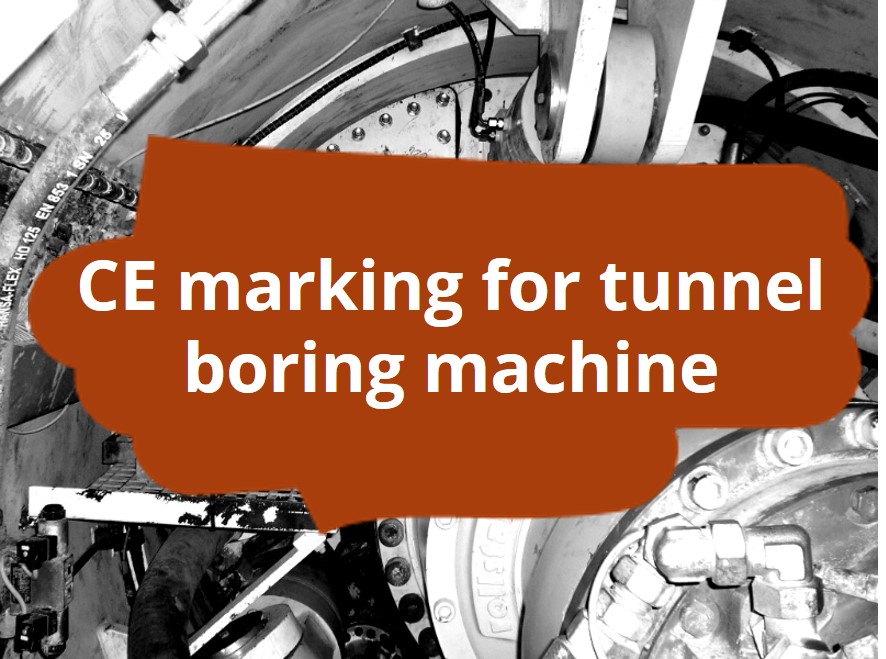
CE marking for a tunnel boring machine used in Australian copper mining
easyCE carries out the conformity assessment for a tunnel boring machine, including risk assessment across its lifecycle and preparation of a declaration of conformity ready to sign. The assessment focused on the new multi-arm cutting-head concept. The work also considered the applicable Australian safety and technical requirements, in close cooperation with the manufacturer and its Australian customer.
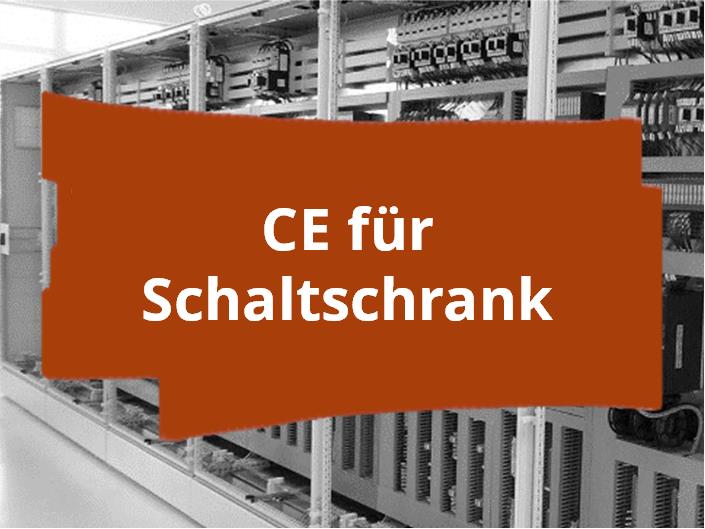
CE marking for control cabinets
easyCE supports the conformity assessment for control cabinets, including risk assessment and preparation of a declaration of conformity ready to sign. The assessment considered the Machinery, EMC and Low Voltage Directives, alongside DIN EN 60204-1:2019-06 and DIN EN IEC 61439-1:2021-10. The work also included a checklist to help select suppliers and components that meet the project's specific requirements.

CE marking for a mobile satellite communications system
easyCE supports the conformity assessment of a mobile satellite communications system, including risk assessment, EMC review and preparation of a declaration of conformity ready to sign. The system routes TCP/IP data redundantly through two or more satellite antennas. It is designed for rapid deployment where a mobile communications link is needed over long distances.
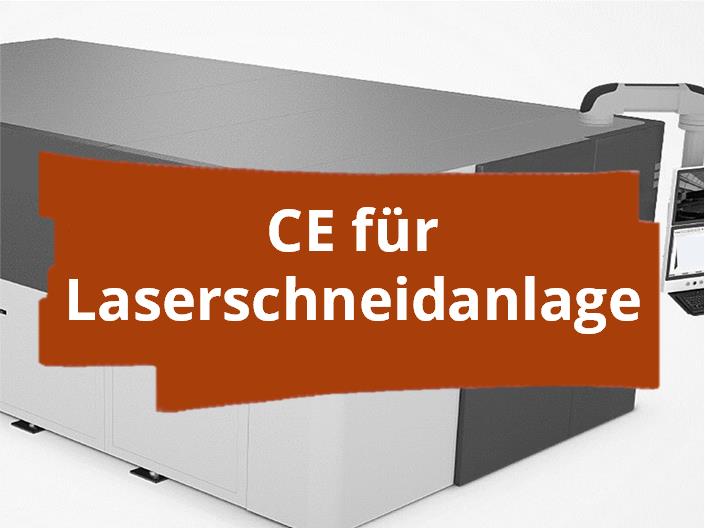
CE marking and declaration of conformity for a 2D laser cutting system
easyCE supports the full conformity assessment for a 2D laser cutting system with an automatic pallet changer. The work included coordinating the safety concept and two-beam light barrier, determining the performance level, analysing the product and carrying out a risk assessment in accordance with EN ISO 12100. Particular attention was needed for the cutting head's support structure and the movements of the pallet changer and cutting head. Laser protection screens, safety devices and a complete enclosure shield operators from the Class 4 laser cutting process inside the cabin, with Class 1 laser conditions outside the machine.
Explore more of our work in the easyCE project portfolio.
Expert support in three clear steps
Step 1
Free initial advice
Describe your product and tell us where you need support. We clarify the applicable requirements and the next steps in a free initial discussion.
Step 2
A clear project proposal
Receive a proposal with a defined scope, deliverables and responsibilities. Your easyCE expert explains the assessment process and the evidence your project needs.
Step 3
Expert delivery
Your dedicated expert coordinates the agreed assessment, documentation and supporting tasks. You receive a structured handover, with any remaining actions clearly identified.
Your compliance project. Expertly handled.
Engineering expertise you can rely on

Willy Lebherz, Founder and Managing Director of easyCE
- Expert in product safety and compliance, since 1995
- Recipient of the "Medal of the Order of Merit of the Federal Republic of Germany", awarded in 1983 by the then Federal President Carl Carstens
- Meister qualification in measurement and control technology
- Captain (ret.), Project Officer for Technical Logistics in the Army Material Office and Chief of the Telecommunications Repair Company
easyCE specialises in product safety and conformity assessment. We combine engineering expertise with digital tools to help manufacturers, machinery users and distributors bring compliant products to market. From risk assessment and identifying relevant standards to technical documentation and test coordination, we carry out the work your project needs. You can choose support for the full process or individual tasks, with a dedicated CE expert as your point of contact. Founded in southern Germany, we work with customers worldwide.
We understand the requirements that apply to your product and can help you work through them.