Understand your WEEE obligations and prepare the right documentation with easyCE.
easyCE reviews how WEEE requirements apply to your electrical and electronic products. We clarify the scope, identify the required information and coordinate the agreed documentation work alongside your product conformity assessment.
Willy Lebherz
Managing Director, easyCE GmbH
Product scope clarified!
Understand whether your electrical or electronic equipment falls within the WEEE requirements.
Responsibilities identified!
Clarify the producer obligations relevant to your sales model and destination countries.
Requirements mapped!
Registration, marking, information and waste-management obligations identified for the agreed scope.
Documentation prepared!
Product and business information organised to support the next compliance steps.
Clear next steps!
Know which national registrations and arrangements need to be addressed before placing equipment on the market.
WEEE and product compliance
Producer responsibilities
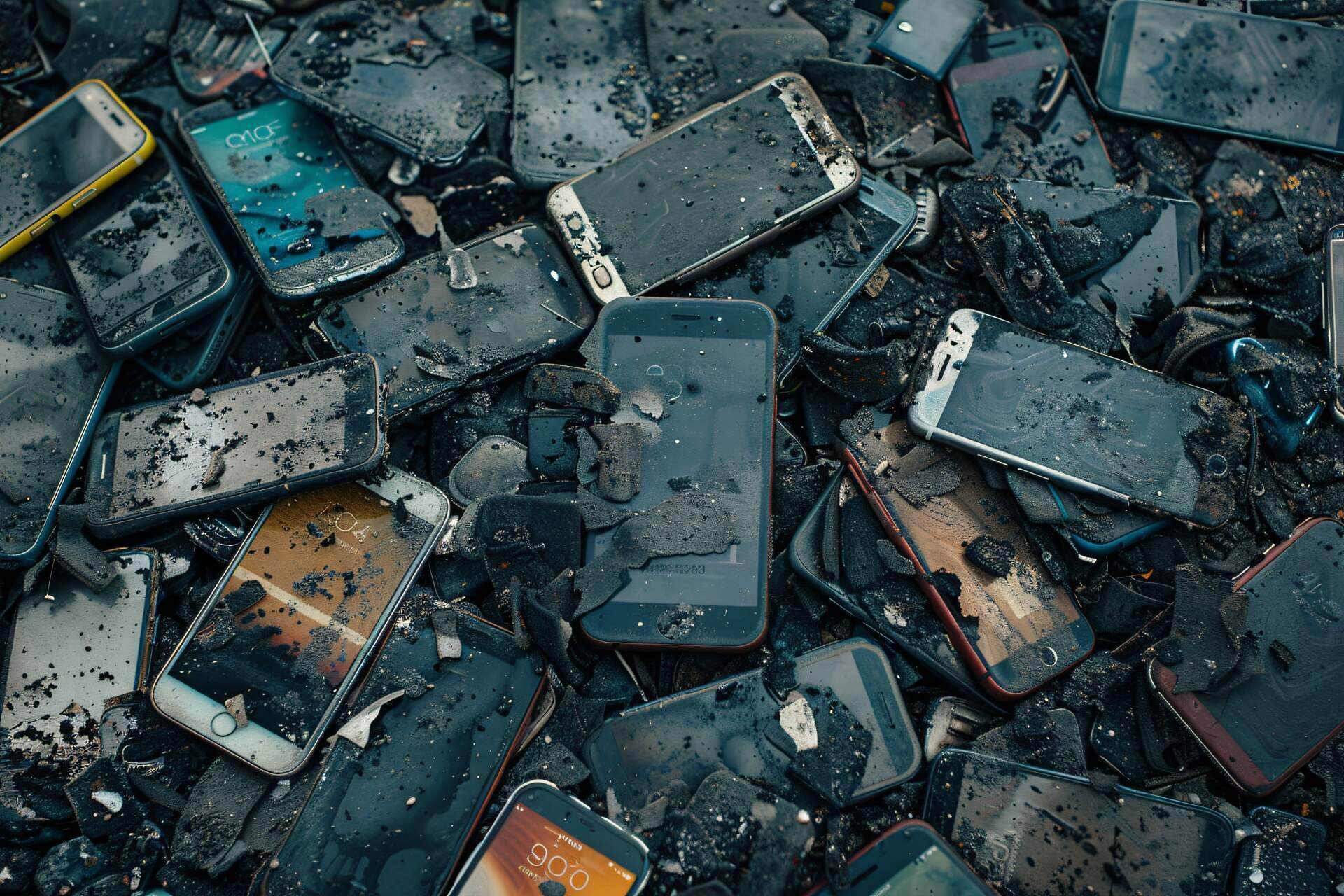
Electrical and electronic waste contains materials that can be recovered, as well as substances that require appropriate treatment. WEEE requirements address what happens when equipment reaches the end of its useful life.
WEEE means waste electrical and electronic equipment. Directive 2012/19/EU sets requirements for separate collection, treatment, recovery and producer responsibility. Its open scope has used six equipment categories since 15 August 2018, subject to the specified exclusions.
WEEE does not itself require CE marking. The same product may require CE marking under other legislation, such as RoHS, the Low Voltage Directive or the Radio Equipment Directive. Assess each set of obligations separately.
easyCE identifies the relevant product requirements and helps organise the information needed for an agreed compliance plan. National registration, reporting and take-back arrangements must be checked in each market where you supply equipment.
WEEE: the essentials
What does the WEEE Directive cover?
Directive 2012/19/EU concerns waste electrical and electronic equipment. It replaced the earlier WEEE directive and establishes requirements for collecting and treating this waste. It is separate from the RoHS Directive 2011/65/EU, which restricts certain hazardous substances in equipment.
The rules aim to prevent waste and improve re-use, recycling and recovery. Producers have defined responsibilities, implemented through national legislation. Compliance involves more than the product's design or a symbol on its label.
Which equipment categories apply?
Since 15 August 2018, in-scope equipment is classified under the six categories in Annex III. Check the category definitions and exclusions rather than choosing from the obsolete list of fourteen categories:
- Temperature exchange equipment.
- Screens, monitors and equipment containing screens larger than 100 cm².
- Lamps.
- Large equipment, with an external dimension exceeding 50 cm, excluding equipment covered by the preceding categories.
- Small equipment, with no external dimension exceeding 50 cm, excluding the preceding categories and small IT and telecommunications equipment.
- Small IT and telecommunications equipment, with no external dimension exceeding 50 cm.
Use the applicable national register's reporting instructions alongside these category definitions. The classification must reflect the actual equipment.
What else affects producer obligations?
The equipment category is only part of the assessment. Determine who is the producer under the relevant national rules, whether the equipment is for household or professional use, and which market and financing arrangements apply.
- Historical waste and equipment placed on the market after the relevant reference dates can have different financing arrangements.
- Do not assume that an owner, distributor or manufacturer is always responsible in the same way. The product type, supply history and national implementation determine the obligations.
Which equipment is excluded?
Article 2 contains specific exclusions. Examples include the following, subject to the detailed definitions and conditions:
- Equipment designed for space and certain equipment specifically for national-security or military purposes.
- Filament bulbs, not all lamps.
- Active implantable medical devices and certain medical or diagnostic equipment expected to be infective before end of life.
- Large-scale stationary industrial tools, qualifying large-scale fixed installations and certain means of transport. These are not blanket exclusions for every industrial product.
Does WEEE compliance require CE marking?
WEEE does not itself require CE marking. A product may nevertheless need it under other legislation, including the Low Voltage Directive where the product falls within its scope.
WEEE addresses waste management and producer responsibility. CE marking indicates conformity with the applicable legislation that requires that marking. Neither obligation should be used as a substitute for the other.
If a product is excluded from WEEE but covered by CE legislation, assess and document the CE requirements independently. If both apply, both sets of obligations must be met.
For example, non-electrical personal protective equipment may require CE marking without falling within WEEE. Equipment incorporating electrical functions needs its own scope assessment.
How do WEEE and the Low Voltage Directive overlap?
The Low Voltage Directive 2014/35/EU and the WEEE Directive address different aspects of electrical equipment. Many products fall under both, but their definitions and exclusions are not identical.
The Low Voltage Directive generally covers equipment designed for 50 to 1,000 V AC or 75 to 1,500 V DC, subject to its exclusions. WEEE also covers many lower-voltage products. Examples of equipment to assess for overlapping obligations include:
- Household electrical appliances.
- Office electrical equipment.
- Lighting equipment.
- Relevant industrial electrical equipment.
- Check the product-specific scope and exclusions before concluding that both acts apply.
How do RoHS and WEEE relate?
The RoHS Directive restricts certain hazardous substances in equipment. The WEEE Directive concerns its waste stage, including separate collection and treatment. Their scopes overlap, but they are not interchangeable.
Appropriate waste treatment depends on the equipment and its contents. Materials and components that may require particular attention include:
- Batteries and accumulators, including those incorporated into equipment.
- Cathode ray tubes from older televisions and monitors.
- Mercury-containing lamps and components.
- Components containing polychlorinated biphenyls.
- Refrigerants and other fluids that require controlled removal and treatment.
The correct waste classification depends on composition and the applicable waste rules. Do not infer that every refrigerant is hazardous or assign a waste code from the product name alone.
What practical measures does WEEE require?
Relevant obligations include producer registration, reporting quantities supplied, financing the appropriate waste arrangements and providing the required marking and information. The detailed duties depend on the national implementation and whether equipment is for household or professional use.
What is extended producer responsibility?
Extended producer responsibility assigns producers defined responsibilities for the waste stage of their products. Under WEEE, this includes financing obligations and information needed for collection and treatment. It does not mean that every producer must operate its own recycling plant.
What is a producer compliance scheme?
A producer compliance scheme is a collective arrangement through which producers can fulfil specified waste-management obligations. Available schemes, approval requirements and terminology vary by country.
A scheme may organise collection, treatment and reporting for its members under the applicable national rules. Check what the agreement covers and what information or duties remain with your business.
How should you plan WEEE compliance?
Identify the in-scope products, producer role and destination countries. Confirm registration, reporting, marking, information and financing duties, then select appropriate take-back or collective arrangements. Keep records that show which products and quantities are covered.
What does a take-back system involve?
A take-back system connects end users or collection points with authorised waste operators and appropriate treatment facilities. The system should fit the equipment and the applicable national rules.
Collection-centre and treatment-facility names differ between countries. Terms such as HWRC, DCF and AATF belong to particular national systems, not a single EU-wide infrastructure. Verify the relevant approvals and evidence of treatment rather than assuming one set of acronyms applies everywhere.
How should you select a recycling provider?
Check that the provider holds the permits or authorisations required for the waste and operations concerned. Confirm the treatment methods, downstream arrangements and records it will supply. A voluntary certification can provide additional evidence, but it does not replace the applicable legal permissions.
How do you register as a producer?
Check the national producer register and rules in each market where the business has producer obligations. Registration may involve a collective scheme or an authorised representative, depending on the supply model and national requirements.
There is no single EU-wide EPR certificate that replaces all national WEEE obligations. Keep registration details, scheme agreements and reporting evidence current. easyCE reviews the technical product information needed for the agreed compliance work.
What information and arrangements should be prepared?
The exact requirements depend on the country and producer role. A practical checklist includes:
- The business identity, product brands and relevant producer registrations.
- Equipment categories and quantities placed on each market.
- Required product identification and separate-collection marking.
- Information needed by treatment and recycling operators.
- Appropriate take-back and treatment arrangements.
- The applicable financing arrangements or guarantees.
- Reporting records for supplied equipment and any required waste-management results.
Use the current forms and guidance of the national register or scheme. A document from one country does not automatically fulfil the requirements of another.
How are quantities placed on the market reported?
Keep product-category and weight records for the relevant reporting periods and markets. Submit them through the required national register or scheme process. Check whether returns, exports or other adjustments are treated separately under that process.
What marking is required?
The crossed-out wheeled-bin symbol indicates that equipment must be collected separately rather than disposed of as unsorted municipal waste. Apply the required identification and date information, and check any permitted exceptions to marking the equipment itself. The symbol does not promise a refund from the manufacturer.
What information do treatment operators need?
Provide the information required to identify relevant components, materials and hazardous substances and to support preparation for re-use and correct treatment. The form and detail should enable operators to carry out the necessary dismantling and recovery work.
How should take-back and recycling be organised?
Use the arrangements required or permitted for your equipment, producer role and destination market. This may involve an approved collective scheme and authorised collection or treatment operators. Confirm responsibilities and keep evidence of the agreed arrangements.
What does the crossed-out wheeled bin mean?
It identifies equipment for separate collection. The accompanying date indication, often a bar beneath the symbol, distinguishes relevant equipment placed on the market after the applicable reference date. Absence of a bar alone does not prove a particular manufacturing year.
What is the purpose of WEEE?
WEEE requirements support waste prevention, re-use and recovery of materials while reducing the environmental and health impacts of discarded electrical equipment.
The practical aim is to keep suitable products and materials in use and ensure appropriate treatment when equipment becomes waste. This involves action at several stages:
- Considering repair, dismantling and material recovery during design.
- Providing clear information and planning the relevant producer responsibilities.
- Making suitable collection and treatment arrangements.
- Keeping records that support reporting and continuous improvement.
Trusted by leading businesses. Chosen for results.












Choose the right support for your project
Scroll horizontally to compare the options.
Approach to conformity assessment
How the work is carried out
Scope of support
Your point of contact
A product-specific plan based on the applicable requirements
Technical work and documentation coordinated by CE experts
An agreed overall scope or selected individual tasks
A dedicated expert who knows your project
Other service providers
Approach depends on the provider and agreed service
Delivery methods vary between providers
Scope defined by the service agreement
Contact arrangements depend on the provider
CE software
Tools organise assessments and documentation
Your team supplies the technical input and uses the tools
Features depend on the selected software and modules
Expert assistance depends on the service package
Technical expertise. A clear plan.
Get started in three steps
Step 1
Get free initial advice
Tell us what your product does, where you plan to supply it and what you need help with. A CE expert will discuss the relevant requirements and next steps with you, free of charge.
Step 2
Receive your proposal
We prepare a proposal for the work your project needs and explain the scope, required inputs and next steps. You can discuss the details with your expert before deciding how to proceed.
Step 3
Start the agreed work
Your dedicated expert carries out and coordinates the agreed technical and documentation tasks. We explain the results and outstanding actions at handover. Any ongoing updates or additional support are agreed separately.
Bring clarity to your CE project
Your experts in product safety and compliance

Willy Lebherz, Founder and Managing Director of easyCE
- Product safety and compliance expert since 1995
- Recipient of the "Medal of the Order of Merit of the Federal Republic of Germany", awarded in 1983 by the then Federal President Carl Carstens
- Meister qualification in measurement and control technology
- Retired captain, former technical logistics project officer and commander of a telecommunications repair company
easyCE is an engineering consultancy specialising in product safety and compliance. We work with manufacturers, machinery users and distributors on risk assessments, standards research, protective measures and technical documentation. Our experts also coordinate required testing and other agreed conformity assessment tasks. You can commission an overall project scope or individual services. Founded in southern Germany, easyCE works with clients internationally.
Technical expertise, clear documentation and a dedicated expert for your project.