
CE marking for PPE done! With easyCE expert support.


EU Regulation 2016/425 on personal protective equipment (PPE)
Prepare your PPE for the right conformity assessment. easyCE identifies the risk category, reviews the protection claims and prepares the technical documentation, including your EU declaration of conformity ready to sign.
Willy Lebherz
Founder and Managing Director of easyCE GmbH

DoC ready to sign!
We prepare your declaration of conformity, ready for the responsible signatory.
Risk assessment completed!
We assess the relevant product risks and document the findings.
Applicable standards identified!
We identify the relevant harmonised standards and check their scope, current references and any restrictions for your product.
Technical documentation created!
We prepare clear technical records and practical instructions for your product.
Ready for CE marking!
Once conformity has been demonstrated, the manufacturer signs the declaration and affixes the required marking.
Your role. Your CE responsibilities.
Manufacturers
Regulation (EU) 2016/425 covers personal protective equipment intended to protect people against health and safety risks. Its categories are based on the risks against which protection is offered, not whether the user is a consumer or a professional.
The category determines the conformity assessment route. Category I uses internal production control. Categories II and III require EU-type examination, and Category III also requires notified-body supervision of production through the applicable module.
easyCE reviews the intended use, protection claims, materials, variants and test evidence. We prepare the agreed risk assessment and technical records and coordinate the necessary notified-body input. The manufacturer retains responsibility for the declaration and CE marking.
Frequently asked questions
Which legislation applies to PPE?
Regulation (EU) 2016/425 governs PPE within its scope and has generally applied since 21 April 2018. It replaced Directive 89/686/EEC. It sets essential health and safety requirements and the conformity assessment procedures that manufacturers must follow.
What counts as PPE?
PPE includes equipment designed and manufactured to be worn or held by a person to protect against one or more health and safety risks. The definition also covers certain interchangeable components and connection systems essential to the protective function.
How is PPE classified?
Annex I divides PPE into three categories according to the risks against which it protects. Category I covers an exhaustive list of minimal risks. Category III covers specified risks with very serious consequences. Category II covers risks not listed in either of those categories.
What is Category I PPE?
Category I covers protection against minimal risks only. Private or professional use does not determine the category.
- Superficial mechanical injury.
- Contact with weak cleaning products or prolonged contact with water.
- Contact with hot surfaces up to 50°C.
- Eye damage from sunlight, other than observing the sun.
- Atmospheric conditions that are not extreme.
Examples may include appropriate gardening gloves or ordinary sunglasses, depending on their actual protective claims.
What is Category II PPE?
Category II covers risks outside Categories I and III. Examples include many forms of mechanical eye protection, industrial helmets and protective clothing, depending on the intended risk. Hearing protection against harmful noise is Category III, not Category II.
What is Category III PPE?
Category III covers specified risks that may cause death or irreversible harm. These include hazardous substances, harmful biological agents, oxygen-deficient atmospheres, ionising radiation, extreme temperatures, falls from height, electric shock and harmful noise.
Other listed risks include drowning, hand-held chainsaw cuts, high-pressure jets and bullet wounds or knife stabs. Classification follows the protection claimed and the risks listed in Annex I, not simply the complexity of the product.
Which PPE is excluded?
Article 2 excludes specific products and uses, including:
- PPE specifically designed for the armed forces or maintaining law and order.
- PPE designed for self-defence, except equipment intended for sporting activities.
- PPE for private use against non-extreme weather or against damp and water during dishwashing.
- PPE exclusively for use on seagoing vessels or aircraft covered by the relevant international treaties.
- Motorcycle and moped head, face or eye protection covered by UN Regulation No 22.
An exclusion from this regulation does not remove other applicable safety requirements.
Which conformity assessment procedure applies?
Article 19 sets the procedures by category:
- Category I: internal production control, Module A.
- Category II: EU-type examination, Module B, followed by conformity to type based on internal production control, Module C.
- Category III: EU-type examination, Module B, followed by either Module C2 supervised product checks or Module D production-process quality assurance.
easyCE prepares the agreed technical evidence and coordinates contact with a notified body designated for the relevant PPE.
What does CE marking mean for PPE?
CE marking indicates that the manufacturer has demonstrated conformity with the applicable EU legislation requiring the marking. It is not a promise that the PPE meets every European standard or protects against every hazard. The product's intended protective function, limitations and instructions remain essential.
What are the main steps towards CE marking?
Begin with the intended use, protection claims and risk category, then plan the assessment and evidence.
- Identify the applicable essential health and safety requirements.
- Assess the risks and select the relevant standards or other technical solutions.
- Plan and document the necessary examinations and tests.
- Prepare the technical documentation and user information.
- Complete the category-specific notified-body procedures where required.
- Issue the EU declaration of conformity and affix the required marking after conformity has been demonstrated.
What does a notified body do?
A notified body is an independent conformity assessment organisation designated for specified tasks under the regulation. It carries out EU-type examination for Categories II and III and the applicable production-supervision tasks for Category III.
It issues the certificates required by the selected procedure. The manufacturer, not the notified body, remains responsible for issuing the EU declaration of conformity and affixing CE marking.
What tests does PPE need?
Testing depends on the protective function, materials, design, variants and applicable requirements. The evidence may come from suitable in-house or external testing, with notified-body assessment as required by the category. easyCE identifies the test requirements and reviews whether the reports cover the actual product and claims.
What does the risk assessment cover?
The risk assessment identifies the risks the PPE is intended to address and the risks arising from its design, use and reasonably foreseeable misuse. It informs protective measures, performance requirements and user information. easyCE assesses the product and documents the agreed findings using the design information, samples and technical discussions needed for the project.
What belongs in the technical documentation?
Annex III specifies the required technical documentation. It must show how the PPE meets the applicable essential health and safety requirements.
- A description of the PPE and its intended use.
- The risk assessment and the applicable essential requirements.
- Design and manufacturing drawings, component information and necessary explanations.
- The harmonised standards or other technical specifications used.
- Calculations, examinations and test reports.
- The means used to maintain conformity in production.
- The manufacturer's instructions and relevant information about interchangeable components or product variants.
How long must technical documentation be retained?
The manufacturer must keep the technical documentation and EU declaration of conformity for ten years after the PPE is placed on the market. The records must be available to competent authorities following a reasoned request. They are not generally public documents, and the regulation does not provide a universal 14-day grace period for missing records.
Who signs the EU declaration of conformity?
The manufacturer issues the declaration under its sole responsibility, signed by a person authorised to act on its behalf. Importing PPE does not automatically authorise an importer to replace the manufacturer's declaration. An importer that markets PPE under its own name or makes a conformity-affecting modification assumes manufacturer obligations.
What must the declaration contain?
Annex IX sets the declaration format. Key information includes:
- Traceable identification of the PPE and the manufacturer's name and address.
- A statement of the manufacturer's sole responsibility.
- The legislation with which conformity is declared.
- The harmonised standards or other technical specifications used.
- For relevant categories, the notified body, EU-type examination certificate and production-surveillance procedure.
- The place and date, signatory's name and function, and signature.
The EU declaration must accompany the PPE or the instructions must provide an internet address where it is accessible.
How is CE marking applied to PPE?
The CE marking must be visible, legible and indelible on the PPE. If the nature of the product makes this impossible or unjustified, it is applied to the packaging and accompanying documents.
- Preserve the prescribed proportions and a minimum height of 5 mm.
- Affix the marking before placing the PPE on the market.
- For Category III, the identification number of the notified body involved in Module C2 or D follows the CE marking.
- EU-type examination alone does not require the Category II product to carry the notified body's number alongside CE.
Trusted by leading businesses. Chosen for results.














Your CE project. Expertly handled.
Scroll horizontally to compare the options.
Approach to CE marking
How the service works
Scope of support
Project contact
Product-specific assessment by experienced engineers
Engineering expertise combined with digital workflows
A complete project or selected tasks
A dedicated expert for your project
Other service providers
Approach depends on the provider and agreed scope
Processes vary between providers
Services depend on the provider and contract
Contact arrangements vary
CE software
Guided workflows based on the software functions
Your team enters information and assesses the results
Scope depends on the available modules
Technical support depends on the subscription
Practical engineering expertise
Successful projects. Results that speak for themselves.
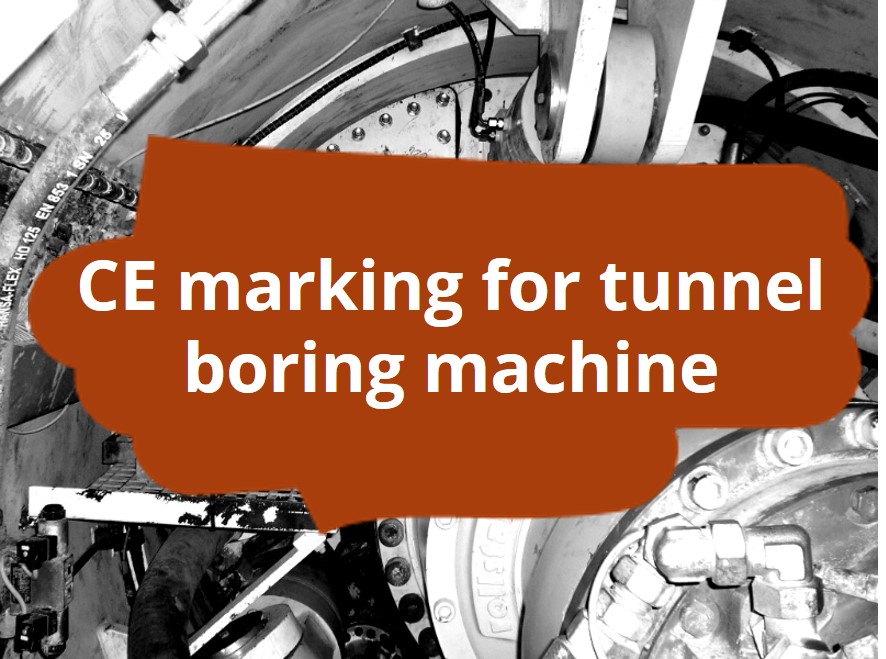
CE marking for a tunnel boring machine used in Australian copper mining
easyCE carries out the conformity assessment for a tunnel boring machine, including risk assessment across its lifecycle and preparation of a declaration of conformity ready to sign. The assessment focused on the new multi-arm cutting-head concept. The work also considered the applicable Australian safety and technical requirements, in close cooperation with the manufacturer and its Australian customer.

CE marking for control cabinets
easyCE supports the conformity assessment for control cabinets, including risk assessment and preparation of a declaration of conformity ready to sign. The assessment considered the Machinery, EMC and Low Voltage Directives, alongside DIN EN 60204-1:2019-06 and DIN EN IEC 61439-1:2021-10. The work also included a checklist to help select suppliers and components that meet the project's specific requirements.

CE marking for a mobile satellite communications system
easyCE supports the conformity assessment of a mobile satellite communications system, including risk assessment, EMC review and preparation of a declaration of conformity ready to sign. The system routes TCP/IP data redundantly through two or more satellite antennas. It is designed for rapid deployment where a mobile communications link is needed over long distances.
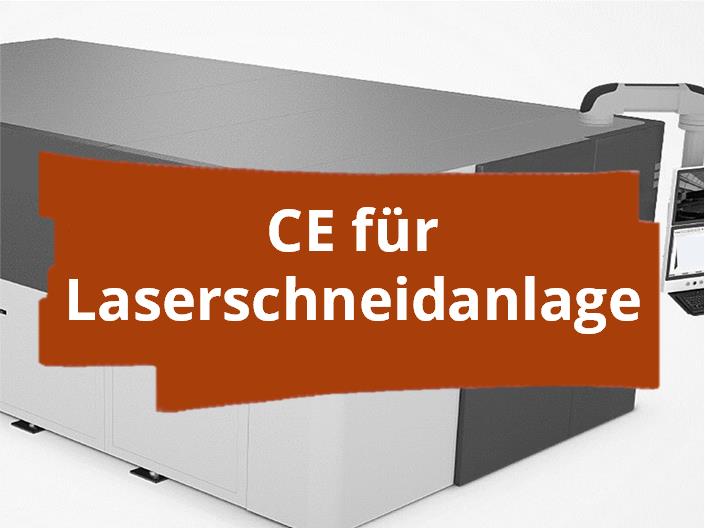
CE marking and declaration of conformity for a 2D laser cutting system
easyCE supports the full conformity assessment for a 2D laser cutting system with an automatic pallet changer. The work included coordinating the safety concept and two-beam light barrier, determining the performance level, analysing the product and carrying out a risk assessment in accordance with EN ISO 12100. Particular attention was needed for the cutting head's support structure and the movements of the pallet changer and cutting head. Laser protection screens, safety devices and a complete enclosure shield operators from the Class 4 laser cutting process inside the cabin, with Class 1 laser conditions outside the machine.
CE marking for hearing protection with audio functions
easyCE prepares the agreed conformity documentation for hearing protection with integrated audio functions. The work considers passive attenuation under EN 352-1 and the audio-output requirements of EN 352-8. The assessment addresses the protective function alongside the applicable requirements for the integrated electronics.
Your project in three steps
Step 1
Discuss your product
Tell us about your product and request free initial advice. We identify the likely conformity requirements and the next steps for your project.
Step 2
Receive your proposal
We explain the required assessments and documentation, then prepare a proposal for the scope you need. You can commission a complete project or individual tasks.
Step 3
Your expert gets started
Your dedicated CE expert carries out the agreed engineering and documentation tasks and keeps you informed throughout the project. Follow-up questions can be discussed with the same expert.
Discuss your CE project
Product safety expertise

Willy Lebherz, Founder and Managing Director of easyCE
- Expert in product safety and conformity since 1995
- Recipient of the "Medal of the Order of Merit of the Federal Republic of Germany", awarded in 1983 by the then Federal President Carl Carstens
- Meister qualification in measurement and control technology
- Captain (ret.), Project Officer for Technical Logistics in the Army Material Office and Chief of the Telecommunications Repair Company
easyCE is an engineering consultancy specialising in product safety and conformity assessment. We help manufacturers, operators and suppliers assess products, reduce risks and prepare the documentation needed for market access. Our engineers identify applicable requirements, develop safety measures, prepare technical documentation and coordinate testing. You can commission the complete agreed process or selected tasks. Founded in southern Germany, easyCE works with clients internationally.
Technical expertise. Clear documentation. A defined route to conformity.