URGENT CE SUPPORT
TECHNICAL CLARITY. TARGETED ACTION.
Resolve urgent CE questions with focused engineering expertise. Whether goods are held at customs or a retailer requests conformity documents, easyCE assesses the issue, identifies missing evidence and prepares the agreed technical documentation. We prioritise the necessary steps around your deadline and prepare clear, product-specific responses for authorities and trading partners.
Willy Lebherz
Founder and Managing Director of easyCE GmbH

Urgent documentation work!
We review your deadline, identify the missing evidence and prioritise the documentation your case needs.
Conformity assessment!
We assess the applicable product requirements and carry out the agreed technical and documentation work.
Clear authority responses!
We prepare the technical information needed to answer customs and market surveillance enquiries.
Documentation reviewed!
We check existing records, identify gaps and prepare the corrections needed to demonstrate conformity.
Urgent issues. Practical solutions.
Goods held at customs
Retailer or marketplace enquiries
Inward processing
Requests from authorities
Start with the reason for the customs hold and the applicable product requirements.
Missing declarations, incomplete instructions or questions about product safety can delay release. Check the authority's request, the product identity and the response deadline before deciding what work is needed. An importer's duties depend on the legislation and its role; importing does not automatically make it the manufacturer.
easyCE reviews the available evidence, identifies gaps and prepares the agreed conformity documents. Where instructed, we coordinate technical responses with the relevant authority. Release remains the authority's decision.
Turn a request from a retailer or marketplace into a clear evidence package.
A sales platform may ask for declarations, test reports or other product information before listing a product or restoring an existing listing. The requested documents must match the specific model and its applicable requirements.
easyCE checks the request against your existing documentation, identifies missing or inconsistent information and prepares the agreed response. We help you keep the evidence organised for future enquiries.
Inward processing is a customs procedure, not a shortcut around product safety.
It can allow non-EU goods to enter the EU customs territory for processing or repair under an authorised procedure. The goods may later be re-exported or released for free circulation, subject to the relevant conditions. Authorisation and the procedure's terms are decided by customs.
easyCE helps you assess the product-conformity issues and prepare the technical documentation for the proposed work. We coordinate the technical questions with you and, where agreed, your customs representative or the authority. The appropriate customs procedure must be established separately.
Respond to an official request with clear, product-specific evidence.
Market surveillance or customs authorities may request technical documents, explanations or corrective action. Identify exactly what has been requested and when it is due. A complete, consistent response matters more than a generic certificate.
easyCE reviews your records, assesses the technical issues and prepares the agreed evidence. We help you explain the findings and proposed corrective measures, while keeping responsibilities and outstanding questions clear.
Discuss your urgent CE issue
Trusted by leading businesses


























EU market preparation
Prepare before shipment
Prepare the right documents
Identify your EU economic operator
Check overseas suppliers
Plan the conformity work before the goods are shipped.
Identify the product, intended use and destination market, then determine the applicable legislation and conformity assessment route. Agree with the manufacturer which evidence, tests, instructions and marking are needed before market entry.
Check that the delivered model matches the documentation. easyCE reviews the planned import, identifies gaps and prepares the agreed assessment and technical records.
Match the documentation to the product and the applicable legislation.
For products subject to CE marking, check the relevant declaration of conformity, product identification, marking and instructions. Technical documentation and appropriate test evidence must be available as required. The complete technical file does not always have to travel with the shipment.
Instructions and safety information must meet the destination market's language requirements. A test report should identify the product and the tests performed; it is not automatically a certificate approving the complete product.
Clarify who carries out the required economic-operator duties in the EU.
For products within Article 4 of Regulation (EU) 2019/1020, an EU-established economic operator must carry out specified compliance tasks. Depending on the supply chain, this may be the manufacturer, importer, a mandated authorised representative or, in the circumstances defined by the regulation, a fulfilment service provider.
These roles are not interchangeable, and sector-specific legislation or the General Product Safety Regulation may impose additional duties. easyCE helps you identify the requirements and organise the relevant product evidence.
Check evidence, not just the appearance of a CE logo.
The same applicable EU product requirements apply regardless of where the manufacturer is based. A correctly shaped CE marking alone does not prove conformity. Check the manufacturer, product model, declaration, relevant reports and instructions, and confirm that they describe the goods you will receive.
easyCE reviews your supplier documentation and identifies inconsistencies or missing evidence. This gives you a clearer basis for resolving issues with the supplier before shipment or responding to a current authority enquiry.
Your CE project. Expertly handled.
Swipe or scroll horizontally to compare all options.
Approach to CE marking
Flexibility of support
Scope of support
Project contact
A clear, practical approach to CE marking
Our experts guide you through CE marking, with support tailored to your needs
Choose the support you need: the full CE marking process or help with individual steps
From the start, you have a dedicated CE expert to support you throughout the process
Other CE service providers
Approach and project fit depend on the provider
Processes and flexibility depend on the provider
Scope agreed with the provider
Contact arrangements agreed for the project
CE software
A standardised workflow that your team adapts to the project
Your team manages the software and carries out the assessment
Features depend on the software and the modules purchased
Technical project support may require an additional service
We make CE marking simpler
Successful projects. Results that speak for themselves.
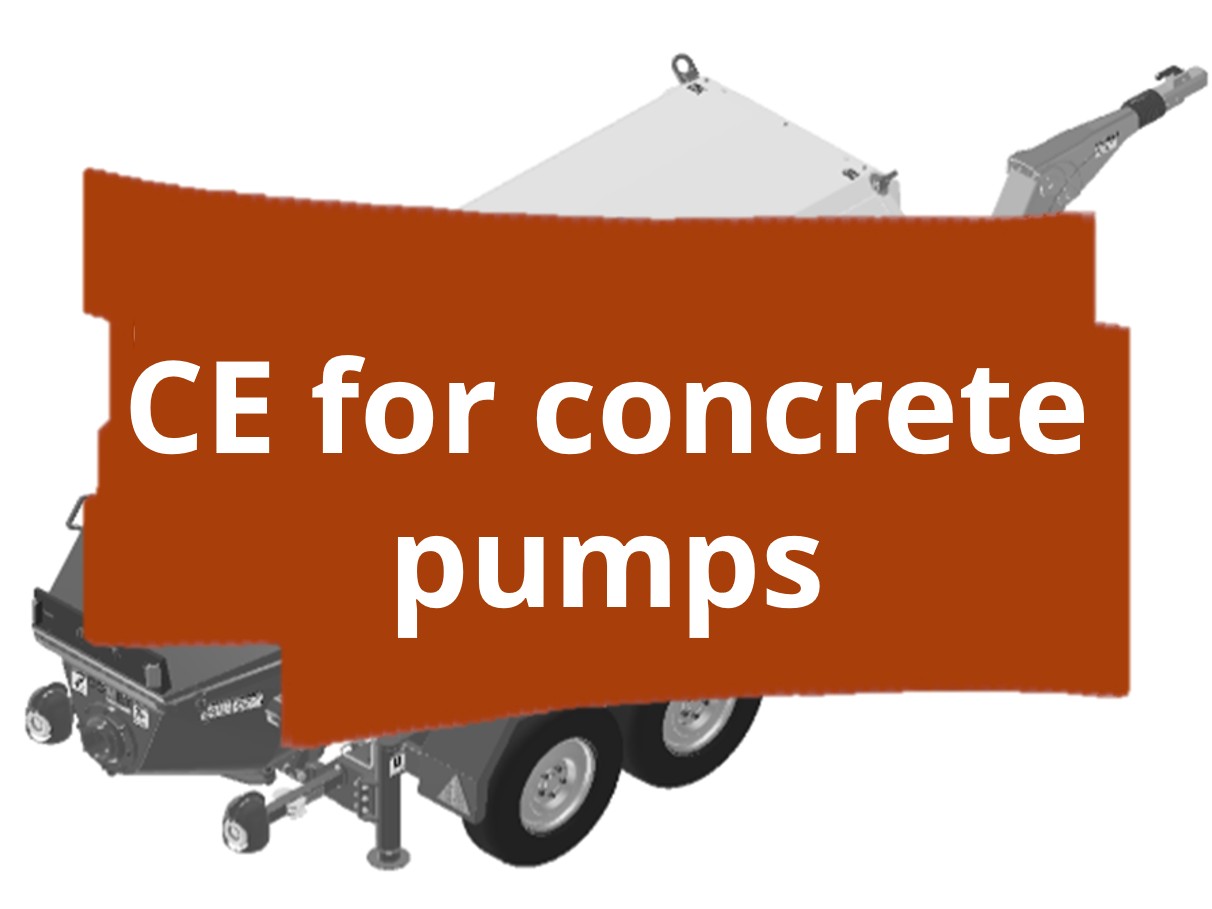
Urgent CE documentation for a mobile concrete pump
easyCE assisted a mobile concrete pump manufacturer with the noise-emission documentation required for its EU import project. We supported measurement planning, evaluation and documentation with reference to Directive 2000/14/EC, and prepared the risk assessment and technical records needed for the conformity assessment.
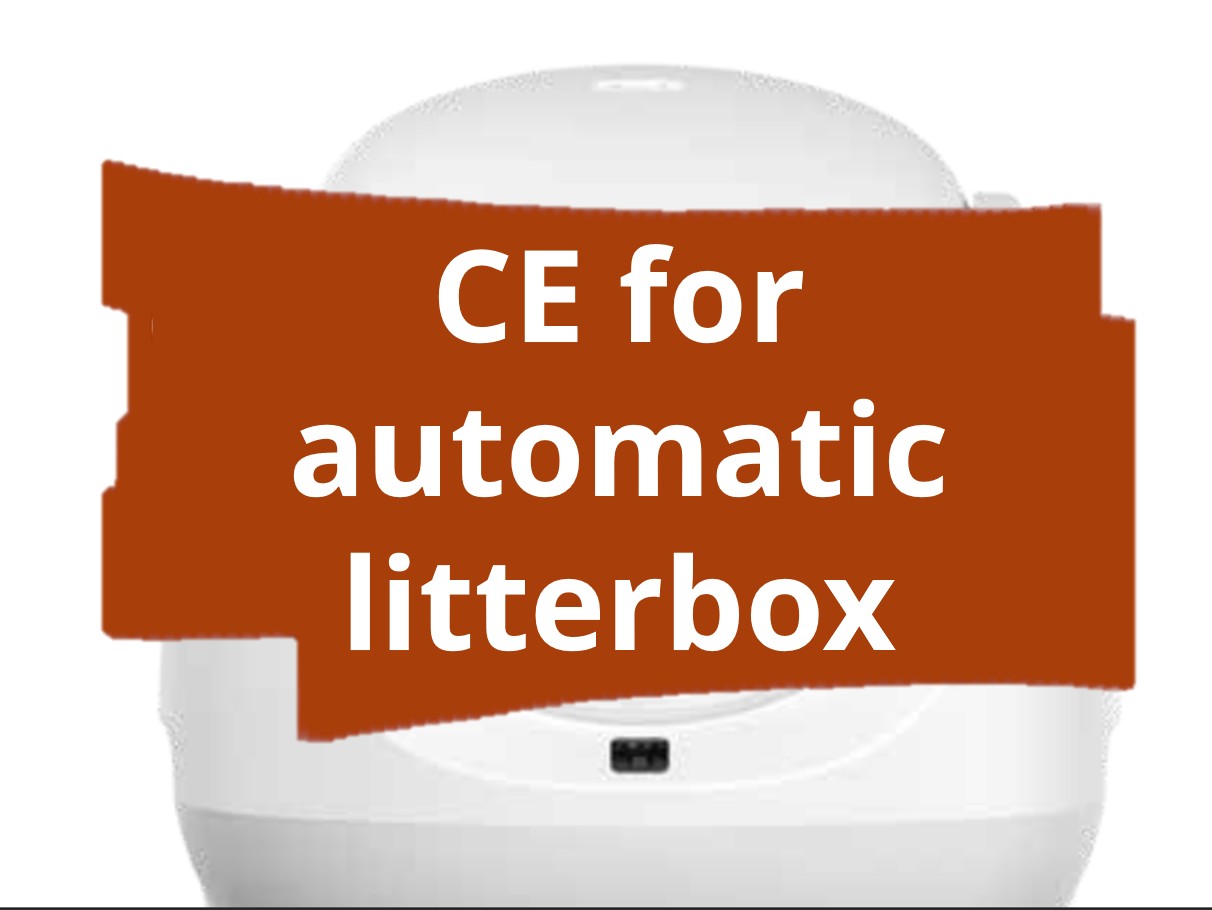
Customs support for an automatic cat litter box
easyCE assisted an importer whose automatic cat litter box was held at customs because of missing CE marking and insufficient technical documentation. We prepared the agreed conformity documents, with particular attention to the electrical components, sensors and automatic cleaning mechanism. The documentation supported the authority's subsequent release of the product.

Urgent conformity documentation for a facial cleansing brush
easyCE prepared conformity documentation for an electric facial cleansing brush held by German authorities. In this project, the documents were completed within the authority's ten-day deadline. The assessment considered the product's cosmetic use, its 5 V supply and the applicable requirements. Submission of the documentation supported the subsequent release. This was a project-specific deadline, not a general service or clearance time.
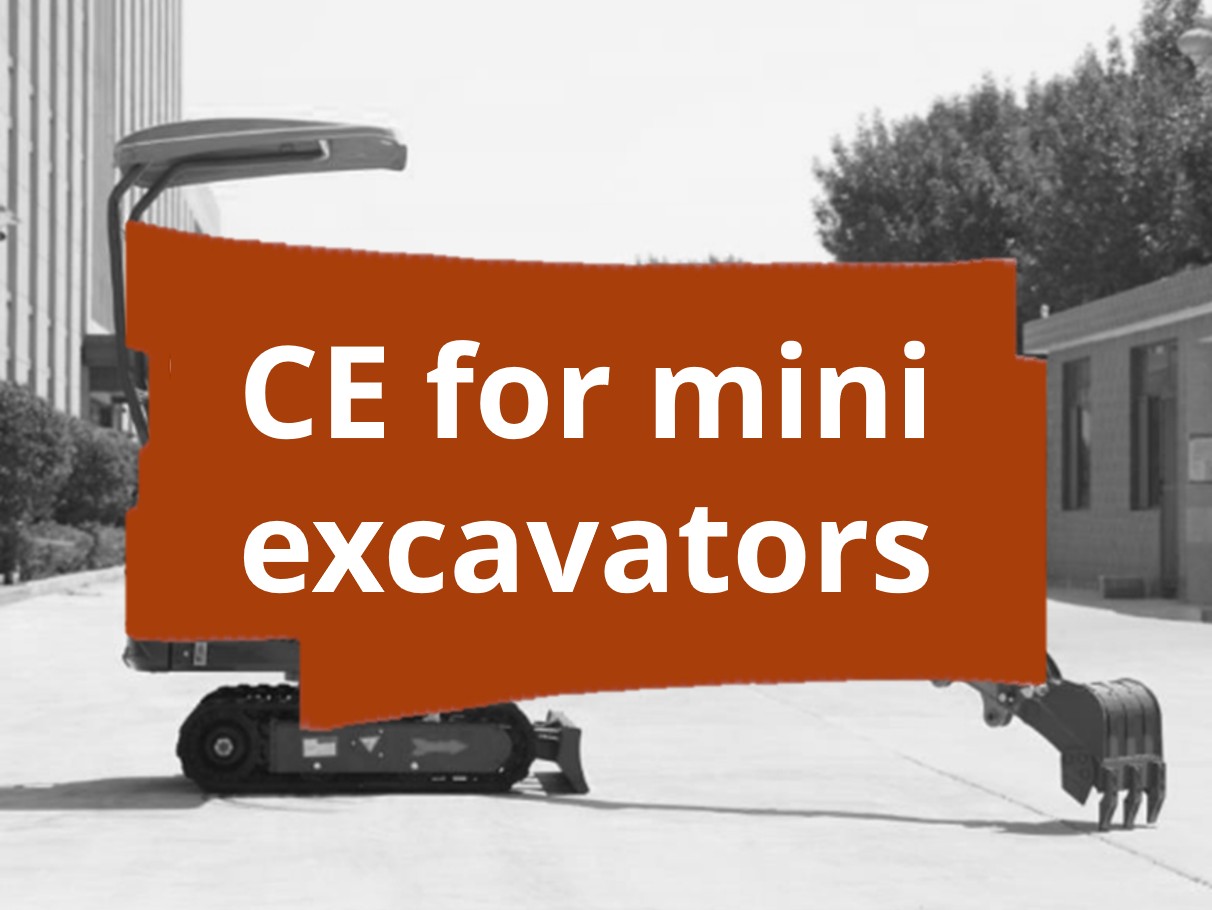
CE and customs documentation for mini excavators
easyCE assisted with the import of mini excavators by preparing the declaration of conformity, risk assessment and product analysis. We identified the relevant testing requirements for earth-moving machinery and supported communication with customs. The work included a list of required tests and consideration of the Outdoor Noise Directive 2000/14/EC.
Your project in three steps
Step 1
Get free initial advice
Tell us about your product, your project stage and what you need help with. A CE expert will discuss the requirements and next steps with you, free of charge.
Step 2
Receive your proposal
Receive a proposal setting out the work your project needs and the scope of our service. We explain the details and answer your questions before you decide how to proceed.
Step 3
We get it done
Once you appoint us, your dedicated CE expert carries out the agreed work and keeps you informed throughout the process. Your expert remains available for follow-up questions after completion.
Discuss your urgent CE issue
Frequently asked questions
How long does customs clearance take when product compliance is questioned?
There is no single clearance time for all products or EU entry points. Timing depends on the reason for the hold, the evidence available, any testing or corrective work and the authority's assessment.
easyCE reviews the technical issues and the response deadline, then agrees the work needed for your case. We do not promise a fixed release date: customs or the relevant market surveillance authority decides whether the conditions for release are met.
Can missing CE marking be corrected while goods are held at customs?
Do not simply add a CE mark to obtain release. The applicable conformity assessment and documentation must support the marking, and the responsible manufacturer must fulfil its obligations.
Some non-compliances can be corrected before release, but the measures and customs arrangements must be coordinated with the relevant authorities. Depending on the product and findings, correction, re-export or other action may be required. We assess the technical gaps and help prepare the agreed corrective documentation.
Which documents should I prepare for an EU import?
The documents depend on the goods, their origin and the procedure. Commercial and transport records are separate from the evidence needed to demonstrate product conformity.
Typical shipment records include the commercial invoice, packing list and transport documents. For products subject to CE marking, check the applicable declaration of conformity, product information, instructions and any required certificates or test evidence. Proof of origin is needed where relevant to the customs treatment. Agree with your customs representative which records must accompany the shipment and which must be available on request.
What costs can arise when goods are held at customs?
A hold can lead to storage, inspection, testing and transport costs, as well as losses caused by delayed delivery. The amounts depend on the goods, the reason for the hold and the organisations involved.
Ask your carrier, storage provider and customs representative for the relevant charges and deadlines. easyCE identifies the conformity work needed and sets out the agreed scope in a proposal. We do not give a blanket estimate for customs or third-party charges.
How can I check a supplier's CE documentation?
Check that the declaration, product identification and supporting evidence refer to the exact model supplied. A CE logo or a generic certificate alone is not enough to establish conformity, regardless of the supplier's country.
Review the applicable legislation, the manufacturer's details, instructions and relevant test reports. Check any notified-body involvement where the assessment route requires it. Reports must be suitable for the applicable requirements; they do not all have to come from a European laboratory. easyCE reviews the evidence and identifies gaps or inconsistencies.
How do ISO 12100, EN ISO 13849-1 and EN IEC 62061 relate to risk assessment?
For machinery, ISO 12100 provides general principles for risk assessment and risk reduction. EN ISO 13849-1 and EN IEC 62061 address safety-related control systems, including their design and validation. They do not replace the overall machinery risk assessment. Standards are generally voluntary; the applicable legislation and the technical solution determine which requirements and evidence are relevant.
Who is responsible for CE marking and the conformity assessment?
The manufacturer is responsible for the applicable conformity assessment and declaration. Importers, distributors and authorised representatives have duties defined by the relevant legislation and their role. Read our general CE marking FAQs or contact easyCE to discuss your product.
Product safety expertise

Willy Lebherz, Founder and Managing Director of easyCE
- Expert in product safety and compliance, since 1995
- Recipient of the "Medal of the Order of Merit of the Federal Republic of Germany", awarded in 1983 by the then Federal President Carl Carstens
- Meister qualification in measurement and control technology
- Captain (ret.), Project Officer for Technical Logistics in the Army Material Office and Chief of the Telecommunications Repair Company
easyCE specialises in product safety and conformity assessment. We combine engineering expertise with digital tools to help manufacturers, importers and distributors bring compliant products to market. From risk assessment and identifying relevant standards to technical documentation and test coordination, we carry out the work your project needs. Choose the full agreed process or individual tasks, with a dedicated CE expert as your point of contact. Founded in southern Germany, we work with customers worldwide.
Tell us about your product. We will identify the requirements and the work needed to move your project forward.