CE marking for your product done! With easyCE expert support.


Turn CE requirements into a clear route to market. easyCE assesses your product, identifies the applicable legislation and prepares the engineering evidence and documentation needed for the required declaration.
Willy Lebherz
Founder and Managing Director of easyCE GmbH

DoC ready to sign!
We prepare your declaration of conformity, ready for the responsible signatory.
Risk assessment completed!
We assess the relevant product risks and document the findings.
Applicable standards identified!
We identify the relevant harmonised standards and check their scope, current references and any restrictions for your product.
Technical documentation created!
We prepare clear technical records and practical instructions for your product.
Ready for CE marking!
Once conformity has been demonstrated, the manufacturer signs the declaration and affixes the required marking.
Your role. Your CE responsibilities.
Manufacturers
CE marking indicates that the manufacturer takes responsibility for conformity with the applicable EU legislation requiring it. It is not an EU approval, a quality award or a mark required for every product.
The product scope determines the safety, health, environmental or performance requirements and the available assessment routes. Machinery, electrical equipment, toys, medical devices, PPE and construction products each have different rules, exceptions and documentation requirements.
easyCE establishes which legislation applies, assesses the product and prepares the agreed technical documentation. We coordinate required testing and notified-body involvement, with a clear division between the engineering work and the manufacturer's responsibility for the final declaration.
Frequently asked questions
What is CE marking?
CE marking is the manufacturer's indication that a product conforms to the applicable EU legislation providing for that marking. It supports access to the EU and EEA markets for products within the relevant scope.
It does not show that the EU or another authority has approved the product, and it is not a voluntary quality mark.
Which products require CE marking?
Only products covered by legislation that requires CE marking must carry it. The scope, exclusions, thresholds and transitional rules must be checked for the actual product. Important areas include:
- Machinery: Directive 2006/42/EC, replaced by Regulation (EU) 2023/1230 from 20 January 2027.
- Outdoor noise: Directive 2000/14/EC.
- Low-voltage electrical equipment and EMC: Directives 2014/35/EU and 2014/30/EU.
- Radio equipment: Directive 2014/53/EU.
- Restricted substances in electrical equipment: RoHS Directive 2011/65/EU, as amended.
- Ecodesign: applicable product measures and the transition from Directive 2009/125/EC to Regulation (EU) 2024/1781.
- Construction products: Regulation (EU) 2024/3110 and the transitional framework retaining relevant provisions and specifications under Regulation (EU) No 305/2011.
- Medical devices and in vitro diagnostic devices: Regulations (EU) 2017/745 and 2017/746.
- Simple pressure vessels and pressure equipment: Directives 2014/29/EU and 2014/68/EU.
- Equipment and protective systems for potentially explosive atmospheres: Directive 2014/34/EU.
- Pyrotechnic articles and civil explosives: Directives 2013/29/EU and 2014/28/EU.
- Personal protective equipment: Regulation (EU) 2016/425.
- Non-automatic weighing instruments and measuring instruments: Directives 2014/31/EU and 2014/32/EU.
- Gas appliances: Regulation (EU) 2016/426, with separate applicable requirements for boiler efficiency and ecodesign.
- Toys: Directive 2009/48/EC, with the main requirements of Regulation (EU) 2025/2509 applying from 1 August 2030.
- Lifts, cableway installations and recreational craft: Directive 2014/33/EU, Regulation (EU) 2016/424 and Directive 2013/53/EU.
- EU fertilising products and batteries: Regulations (EU) 2019/1009 and 2023/1542.
This is an overview, not an exhaustive scope decision. Additional CE legislation can apply to particular products. Construction products, for example, use specific performance declarations and assessment arrangements.
Which English term should be used?
CE marking is the established legal term for the marking. CE mark is also commonly used when referring to the symbol. Conformity assessment is the process used to demonstrate compliance before the marking is applied.
EC and EU may appear in the titles of declarations or legal acts according to the legislation concerned. They should not be treated as alternative names for the CE symbol.
Does WEEE form part of CE marking?
The WEEE Directive 2012/19/EU concerns waste electrical and electronic equipment and does not itself require CE marking. Its obligations may still apply to a product that also requires CE marking under other legislation.
Typical duties concern producer registration, collection and treatment, reporting and the separate-collection symbol. National implementation must be checked for each market. WEEE and RoHS are separate legal frameworks.
How do EU regulations and directives differ?
An EU regulation applies directly in the Member States from the dates specified in it. A directive requires national implementation while setting the result Member States must achieve.
Entry into force is not always the same as the date a product requirement starts to apply. Transitional provisions and product-specific application dates must be checked in either case.
Does the General Product Safety Regulation require CE marking?
No. Regulation (EU) 2023/988, which has applied since 13 December 2024, does not itself introduce CE marking. It provides general consumer product safety requirements within its scope.
A product may still require CE marking under other legislation. Other frameworks, including waste, packaging or certain transport equipment rules, may impose obligations or their own markings without creating a CE requirement.
What does the CE mark communicate?
It indicates that the responsible manufacturer has completed the applicable conformity assessment and declares conformity with the legislation that requires the mark.
- The product falls within the relevant CE marking scope.
- The required assessment and supporting documentation have been completed.
- The manufacturer takes responsibility for the applicable requirements.
The mark is not a guarantee of every aspect of quality or suitability for a particular installation. Construction product marking also has a specific relationship to declared performance under the applicable construction product framework.
What is a harmonised standard?
A harmonised standard is a European standard developed by CEN, CENELEC or ETSI following a European Commission request. Publication of its reference for the relevant legislation can support a presumption of conformity for the requirements it covers.
Standards are generally voluntary under the New Approach product framework. The correct edition, scope, restrictions and coverage matter. Construction products have a distinct framework for harmonised technical specifications and performance assessment, so the general rule must not be applied without checking the sector.
What is conformity assessment?
Conformity assessment demonstrates that the product meets the applicable requirements. Depending on the legislation, this can include internal production control, type examination, product verification or assessment of a quality system.
The law determines which routes are available. A simple high-risk versus low-risk rule is not sufficient, and the absence of harmonised standards does not require a notified body under every directive. easyCE helps select the route and prepare the necessary evidence.
How do the assessment modules relate to design and production?
The modules describe defined assessment activities covering design, production or both. The relevant product legislation selects which modules and combinations can be used.
- Module A covers internal production control.
- Module B assesses a type and must be followed by an appropriate production-stage module.
- Modules C, D, E and F address different ways of demonstrating production conformity.
- Modules G and H cover unit verification and full quality assurance respectively.
Variants such as A1, C2 or H1 add specific controls. Always use the precise procedure in the applicable legal act.
What do the main modules involve?
Each module assigns defined tasks to the manufacturer and, where required, a notified body. The following summary explains their main purpose.
- A: internal production control by the manufacturer.
- B: type examination by a notified body.
- C: conformity to the approved type based on internal production control.
- D: production-process quality assurance.
- E: product quality assurance.
- F: product verification.
- G: verification of an individual unit.
- H: full quality assurance.
The detailed requirements and any module variants depend on the applicable legislation. A module name alone is not a complete assessment plan.
How do I prepare my product for CE marking?
Start with the intended use and scope, then work through the required engineering evidence and assessment. easyCE can carry out the agreed tasks and coordinate the process with your team.
- Identify all applicable legislation and requirements.
- Assess risks and implement the necessary safety or performance measures.
- Select relevant technical specifications and the prescribed assessment route.
- Carry out or arrange the required examinations and tests.
- Compile the technical documentation, instructions, identification and labelling.
- Complete required notified-body involvement.
- Issue the appropriate declaration and apply the required marking after conformity is demonstrated.
The required declaration, retention period and marking details depend on the legislation. For example, not every technical file has the same ten-year starting point, and a notified-body number follows the CE mark only where the relevant rules require it.
Does VDE certification replace CE marking?
No. VDE certification is a separate testing and certification service with its own schemes and marks. It can provide useful independent evidence within the certified scope.
A voluntary VDE mark is not a general prerequisite for CE marking and does not replace the manufacturer's assessment under all applicable EU legislation.
How long does conformity assessment take?
The timescale depends on the product, the maturity of the design and documentation, required tests and any notified-body involvement. A universal four-to-six-week estimate would be misleading.
easyCE reviews the starting point, identifies gaps and agrees a realistic project sequence. Design changes or missing test evidence can affect the programme and should be identified early.
Trusted by leading businesses. Chosen for results.














Your CE project. Expertly handled.
Scroll horizontally to compare the options.
Approach to CE marking
How the service works
Scope of support
Project contact
Product-specific assessment by experienced engineers
Engineering expertise combined with digital workflows
A complete project or selected tasks
A dedicated expert for your project
Other service providers
Approach depends on the provider and agreed scope
Processes vary between providers
Services depend on the provider and contract
Contact arrangements vary
CE software
Guided workflows based on the software functions
Your team enters information and assesses the results
Scope depends on the available modules
Technical support depends on the subscription
Practical engineering expertise
Successful projects. Results that speak for themselves.
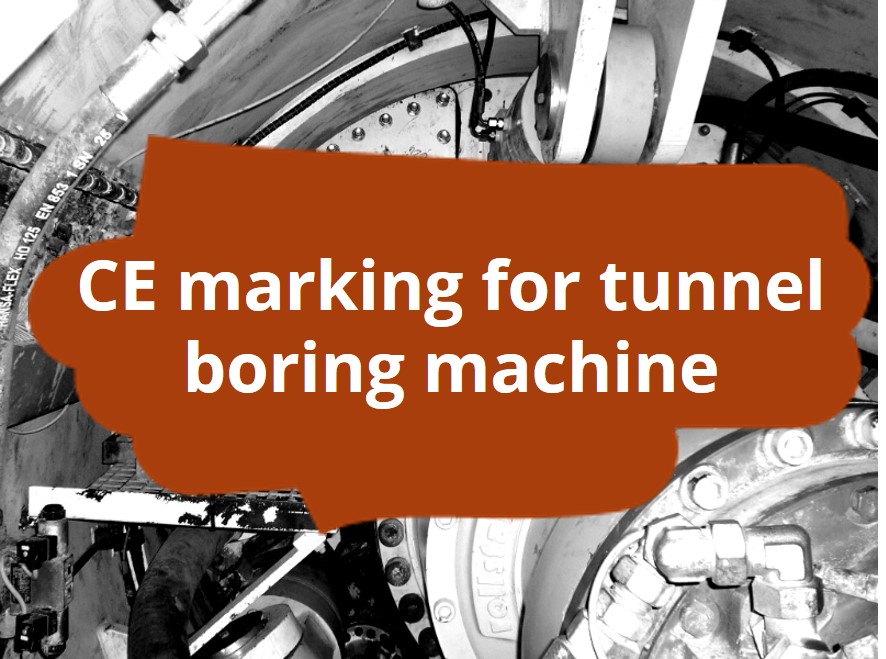
CE marking for a tunnel boring machine used in Australian copper mining
easyCE carries out the conformity assessment for a tunnel boring machine, including risk assessment across its lifecycle and preparation of a declaration of conformity ready to sign. The assessment focused on the new multi-arm cutting-head concept. The work also considered the applicable Australian safety and technical requirements, in close cooperation with the manufacturer and its Australian customer.
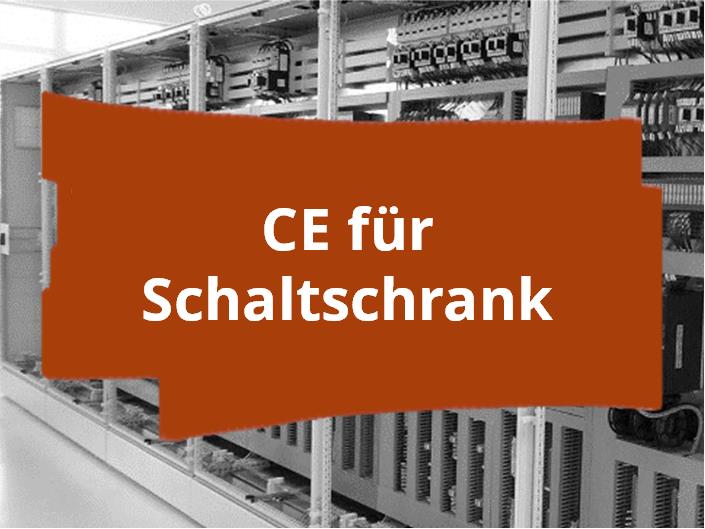
CE marking for control cabinets
easyCE supports the conformity assessment for control cabinets, including risk assessment and preparation of a declaration of conformity ready to sign. The assessment considered the Machinery, EMC and Low Voltage Directives, alongside DIN EN 60204-1:2019-06 and DIN EN IEC 61439-1:2021-10. The work also included a checklist to help select suppliers and components that meet the project's specific requirements.

CE marking for a mobile satellite communications system
easyCE supports the conformity assessment of a mobile satellite communications system, including risk assessment, EMC review and preparation of a declaration of conformity ready to sign. The system routes TCP/IP data redundantly through two or more satellite antennas. It is designed for rapid deployment where a mobile communications link is needed over long distances.
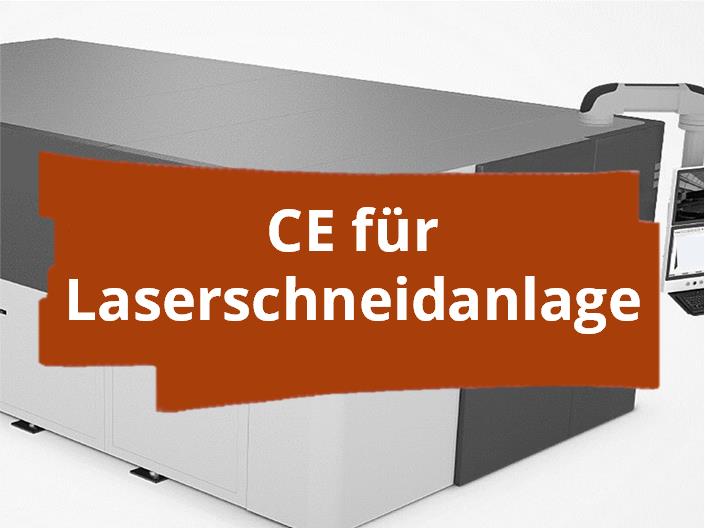
CE marking and declaration of conformity for a 2D laser cutting system
easyCE supports the full conformity assessment for a 2D laser cutting system with an automatic pallet changer. The work included coordinating the safety concept and two-beam light barrier, determining the performance level, analysing the product and carrying out a risk assessment in accordance with EN ISO 12100. Particular attention was needed for the cutting head's support structure and the movements of the pallet changer and cutting head. Laser protection screens, safety devices and a complete enclosure shield operators from the Class 4 laser cutting process inside the cabin, with Class 1 laser conditions outside the machine.
Your project in three steps
Step 1
Discuss your product
Tell us about your product and request free initial advice. We identify the likely conformity requirements and the next steps for your project.
Step 2
Receive your proposal
We explain the required assessments and documentation, then prepare a proposal for the scope you need. You can commission a complete project or individual tasks.
Step 3
Your expert gets started
Your dedicated CE expert carries out the agreed engineering and documentation tasks and keeps you informed throughout the project. Follow-up questions can be discussed with the same expert.
Discuss your CE project
Product safety expertise

Willy Lebherz, Founder and Managing Director of easyCE
- Expert in product safety and conformity since 1995
- Recipient of the "Medal of the Order of Merit of the Federal Republic of Germany", awarded in 1983 by the then Federal President Carl Carstens
- Meister qualification in measurement and control technology
- Captain (ret.), Project Officer for Technical Logistics in the Army Material Office and Chief of the Telecommunications Repair Company
easyCE is an engineering consultancy specialising in product safety and conformity assessment. We help manufacturers, operators and suppliers assess products, reduce risks and prepare the documentation needed for market access. Our engineers identify applicable requirements, develop safety measures, prepare technical documentation and coordinate testing. You can commission the complete agreed process or selected tasks. Founded in southern Germany, easyCE works with clients internationally.
Technical expertise. Clear documentation. A defined route to conformity.