
CE marking for gas appliances done! With easyCE expert support.


Bring your gas appliance or fitting to market with a clear conformity assessment plan. easyCE reviews the applicable requirements, assesses product risks and prepares the technical documentation. We coordinate the evidence your project needs and support the process with your notified body.
Willy Lebherz
Founder and Managing Director of easyCE GmbH
DoC ready to sign!
Receive the declaration for your review and signature once the required assessment and evidence are complete.
Risk assessment completed!
Identify product hazards, assess risks and document the necessary protective measures.
Applicable standards identified!
We identify the relevant harmonised standards and check their scope, current references and any restrictions for your product.
Technical documentation prepared!
Bring the assessment, supporting evidence and product instructions together in a structured technical file.
CE marking prepared!
Clarify the marking and information your product needs before it is placed on the market.
Gas Appliances Regulation. The essentials.
Requirements at a glance
Regulation (EU) 2016/426, known as the Gas Appliances Regulation or GAR, covers specified appliances burning gaseous fuels and fittings intended for incorporation into them. Applicability depends on the appliance’s purpose and the regulation’s definitions and exclusions.
Manufacturers must address the applicable essential requirements, carry out the relevant conformity assessment procedure and prepare an EU declaration of conformity. Both appliances and fittings within scope require CE marking. The assessment routes include notified-body involvement.
easyCE identifies the requirements for your product, reviews risks and supporting evidence, and prepares a structured technical file. We help coordinate the information needed for assessment, instructions and marking, including interfaces with other applicable product legislation.
Frequently asked questions
What is the purpose of the Gas Appliances Regulation?
The Gas Appliances Regulation (EU) 2016/426 sets safety and related requirements for appliances burning gaseous fuels and for their fittings. It protects people, domestic animals and property during normal use.
It replaced Directive 2009/142/EC and has applied since 21 April 2018. Other legislation may also apply to a product, including relevant electrical, electromagnetic compatibility or ecodesign requirements. The GAR does not automatically demonstrate compliance with those separate requirements.
For the GAR, gaseous fuel means fuel that is gaseous at 15°C and an absolute pressure of 1 bar. Fittings include safety, controlling and regulating devices and their subassemblies intended for incorporation into, or assembly into, an appliance.
What does the regulation require?
The GAR defines essential product requirements, conformity assessment procedures, technical documentation, CE marking and the responsibilities of manufacturers, importers and distributors.
Manufacturers are responsible for the design, assessment and declaration of conformity. Importers and distributors have their own verification and supply-chain obligations; they do not automatically have identical duties. An importer or distributor can take on manufacturer obligations by supplying a product under its own name or making a modification that may affect conformity.
A used appliance imported from outside the EU for the first time must be considered separately from one already lawfully placed on the EU market. The regulation does not require every existing appliance to undergo a new assessment simply because it changes hands.
What do the GAR annexes cover?
The annexes provide the detailed requirements and assessment framework needed to demonstrate product conformity.
- Annex I: essential requirements for appliances and fittings.
- Annex II: Member States’ communications on gas supply conditions.
- Annex III: conformity assessment procedures for appliances and fittings.
- Annex IV: inscriptions that accompany the marking requirements.
- Annex V: the model EU declaration of conformity.
Which products fall within the GAR?
The GAR covers appliances burning gaseous fuels for cooking, refrigeration, air conditioning, space heating, hot-water production, lighting or washing. It also covers forced-draught burners, heating bodies fitted with them and fittings as defined in the regulation.
The main exclusions concern appliances specifically designed for industrial processes carried out on industrial premises, appliances for use on aircraft and railways, and appliances specifically designed for research purposes for temporary use in laboratories. These are defined exclusions, not blanket exemptions for all industrial or research equipment.
What are typical examples of gas appliances?
Examples include gas cookers and hobs, boilers, water heaters, space heaters, patio heaters and gas-fired catering equipment. The product’s intended purpose and design determine whether it is within scope.
- Forced-draught burners and heating bodies designed to be fitted with them.
- Camping appliances that burn gaseous fuel for a purpose covered by the regulation.
- Safety, controlling and regulating devices intended for incorporation into a gas appliance.
Fuel type alone does not settle the question. For unusual products or new fuel applications, assess the GAR definitions, intended use, supply conditions and any other applicable legislation.
What changed when the GAR replaced Directive 2009/142/EC?
The GAR has applied since 21 April 2018. It strengthened the common framework for economic operators and assessment, and requires CE marking and an EU declaration of conformity for fittings as well as appliances.
Appliances and fittings complying with the former directive and placed on the market before 21 April 2018 benefit from the regulation’s transitional provision. It is therefore incorrect to say that every earlier product or document became invalid on that date.
GAR EU type-examination certificates have a maximum validity of ten years from issue. Product changes or developments in the state of the art may require review before expiry. Manufacturers must inform the notified body of changes that may affect conformity or the certificate’s validity.
Are harmonised standards compulsory?
No. Applying harmonised standards is voluntary. References published in the Official Journal provide a presumption of conformity only for the essential requirements covered by the cited standards.
The manufacturer can use another technical solution but must demonstrate that it meets the applicable requirements. The technical documentation should identify the standards or specifications used, any partial application and the evidence supporting the design. The product’s intended gas family, gas group and supply pressures also need to be addressed.
How does a gas appliance or fitting obtain CE marking?
The manufacturer completes the applicable GAR conformity assessment procedure, prepares the EU declaration of conformity and affixes CE marking. The procedures involve a notified body.
- For series production, EU type-examination under Module B is combined with Module C2, D, E or F.
- For a single unit or small quantities, unit verification under Module G is an alternative.
- Both appliances and fittings within scope require CE marking. The notified body’s identification number accompanies it where that body is involved in production control.
The manufacturer remains responsible for conformity. easyCE supports the assessment preparation and documentation; we do not replace the notified body or issue its certificate.
What belongs in the technical documentation?
The technical documentation must allow conformity with the applicable requirements to be assessed. It includes an adequate risk analysis and assessment, supported by evidence covering the design, manufacture and operation.
- A general description of the appliance or fitting.
- Design and manufacturing drawings, component and circuit diagrams, and explanations of their operation.
- Applicable requirements and the harmonised standards or other technical specifications used.
- Design calculations, examination results and test reports.
- Installation and operating instructions for the appliance.
- For fittings, the EU declaration of conformity and instructions for incorporation or assembly.
For EU type-examination, the notified body examines the technical design and the representative product specimen. Keep the technical documentation and EU declaration of conformity for ten years after the appliance or fitting is placed on the market.
How should gas-appliance risks be assessed?
Identify hazards throughout the intended use and reasonably foreseeable misuse, assess the risks and document the protective measures. The GAR does not prescribe one particular risk-matrix format.
Relevant issues include gas leakage, ignition, combustion products, hot surfaces, control-system faults, installation conditions and maintenance. First eliminate or reduce risks through design, then apply necessary protective measures and provide information about remaining risks. Warnings are not a substitute for an adequate technical solution.
easyCE helps connect each identified hazard to the applicable requirement, protective measure and verification evidence, so the assessment supports both the product design and its technical documentation.
Trusted by leading businesses. Chosen for results.














Your compliance project. Expertly handled.
Scroll horizontally to compare the options.
Approach to CE marking
Flexibility of support
Scope of support
Project contact
A clear, practical approach to CE marking
Our experts guide you through CE marking, with support tailored to your needs
Choose the support you need: the full CE marking process or help with individual steps
From the start, you have a dedicated CE expert to support you throughout the process
Other CE service providers
Approach and project fit depend on the provider
Processes and flexibility depend on the provider
Scope agreed with the provider
Contact arrangements agreed for the project
CE software
A standardised workflow that your team adapts to the project
Your team manages the software and carries out the assessment
Features depend on the software and the modules purchased
Technical project support may require an additional service
Expertise that moves your project forward.
Successful projects. Results that speak for themselves.
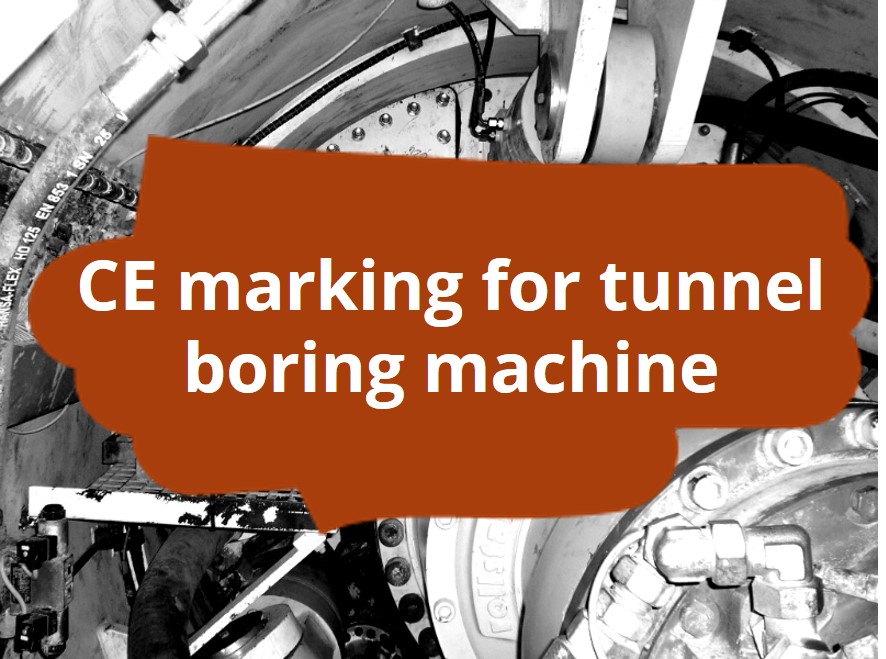
CE marking for a tunnel boring machine used in Australian copper mining
easyCE carries out the conformity assessment for a tunnel boring machine, including risk assessment across its lifecycle and preparation of a declaration of conformity ready to sign. The assessment focused on the new multi-arm cutting-head concept. The work also considered the applicable Australian safety and technical requirements, in close cooperation with the manufacturer and its Australian customer.
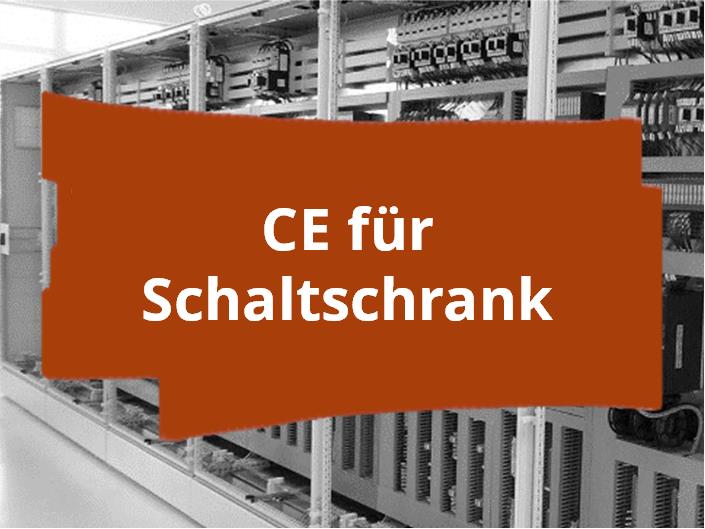
CE marking for control cabinets
easyCE supports the conformity assessment for control cabinets, including risk assessment and preparation of a declaration of conformity ready to sign. The assessment considered the Machinery, EMC and Low Voltage Directives, alongside DIN EN 60204-1:2019-06 and DIN EN IEC 61439-1:2021-10. The work also included a checklist to help select suppliers and components that meet the project's specific requirements.

CE marking for a mobile satellite communications system
easyCE supports the conformity assessment of a mobile satellite communications system, including risk assessment, EMC review and preparation of a declaration of conformity ready to sign. The system routes TCP/IP data redundantly through two or more satellite antennas. It is designed for rapid deployment where a mobile communications link is needed over long distances.
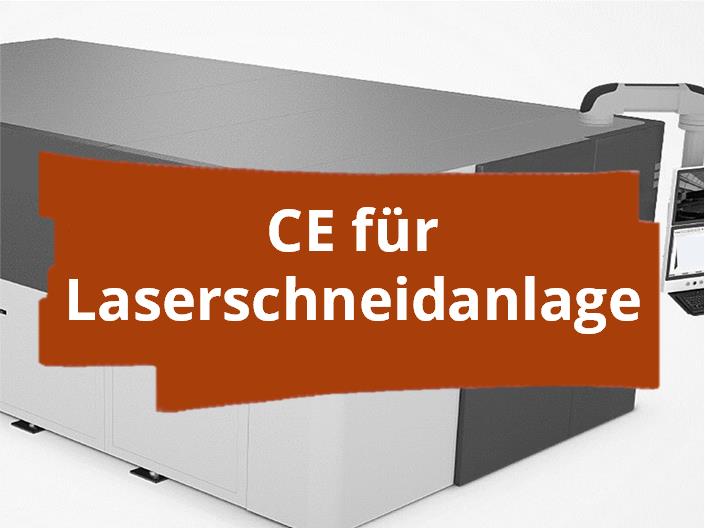
CE marking and declaration of conformity for a 2D laser cutting system
easyCE supports the full conformity assessment for a 2D laser cutting system with an automatic pallet changer. The work included coordinating the safety concept and two-beam light barrier, determining the performance level, analysing the product and carrying out a risk assessment in accordance with EN ISO 12100. Particular attention was needed for the cutting head's support structure and the movements of the pallet changer and cutting head. Laser protection screens, safety devices and a complete enclosure shield operators from the Class 4 laser cutting process inside the cabin, with Class 1 laser conditions outside the machine.
Explore more of our work in the easyCE project portfolio.
Expert support in three clear steps
Step 1
Free initial advice
Describe your product and tell us where you need support. We clarify the applicable requirements and the next steps in a free initial discussion.
Step 2
A clear project proposal
Receive a proposal with a defined scope, deliverables and responsibilities. Your easyCE expert explains the assessment process and the evidence your project needs.
Step 3
Expert delivery
Your dedicated expert coordinates the agreed assessment, documentation and supporting tasks. You receive a structured handover, with any remaining actions clearly identified.
Your compliance project. Expertly handled.
Engineering expertise you can rely on

Willy Lebherz, Founder and Managing Director of easyCE
- Expert in product safety and compliance, since 1995
- Recipient of the "Medal of the Order of Merit of the Federal Republic of Germany", awarded in 1983 by the then Federal President Carl Carstens
- Meister qualification in measurement and control technology
- Captain (ret.), Project Officer for Technical Logistics in the Army Material Office and Chief of the Telecommunications Repair Company
easyCE specialises in product safety and conformity assessment. We combine engineering expertise with digital tools to help manufacturers, machinery users and distributors bring compliant products to market. From risk assessment and identifying relevant standards to technical documentation and test coordination, we carry out the work your project needs. You can choose support for the full process or individual tasks, with a dedicated CE expert as your point of contact. Founded in southern Germany, we work with customers worldwide.
We understand the requirements that apply to your product and can help you work through them.