CE marking for medical devices done! With easyCE expert support.


Build a technical file that connects your device design to the required evidence. easyCE reviews documentation gaps and supports the agreed risk management, assessment and documentation tasks under the MDR.
Willy Lebherz
Founder and Managing Director of easyCE GmbH
DoC ready to sign!
We prepare your declaration of conformity, ready for the responsible signatory.
Risk assessment completed!
We assess the relevant product risks and document the findings.
Applicable standards identified!
We identify the relevant harmonised standards and check their scope, current references and any restrictions for your product.
Technical documentation created!
We prepare clear technical records and practical instructions for your product.
Ready for CE marking!
Once conformity has been demonstrated, the manufacturer signs the declaration and affixes the required marking.
Your role. Your CE responsibilities.
Manufacturers
The Medical Devices Regulation (EU) 2017/745, or MDR, has applied since 26 May 2021. Technical documentation must demonstrate the device's conformity and remain current throughout its lifecycle. Conditional transitional provisions exist for certain legacy devices; they do not make the MDR a future requirement for all products.
Annexes II and III define the technical documentation and post-market surveillance records. The evidence must connect the intended purpose, design, risk management, verification, validation and clinical evaluation. A file called a Design History File is not, by itself, proof that these requirements are met.
easyCE reviews the documentation structure, identifies missing evidence and prepares the agreed records with your development team and relevant specialists. The device classification and assessment route determine whether, and to what extent, a notified body must be involved.
Frequently asked questions
What does the MDR require from technical documentation?
The MDR requires structured evidence demonstrating conformity with the applicable general safety and performance requirements. Annexes II and III cover the technical documentation and post-market surveillance documentation.
The file must be clear, organised, readily searchable and unambiguous. It must be maintained as the design, clinical evidence and experience in use develop. The MDR already applies; any legacy-device transition must be assessed against its specific conditions.
Is a Design History File required by the MDR?
The MDR does not define a mandatory file called a Design History File, or DHF. The term is often used for records demonstrating how a device was designed, reviewed, verified, validated and changed.
Design and development records can support MDR conformity and the quality management system. What matters is that the required evidence is complete, controlled and traceable, not that it carries a particular file name. Changes must be reviewed for their effect on risks, performance and regulatory conformity.
What is a medical device technical file?
The technical file is the organised evidence showing how the device meets the MDR requirements. It covers more than manufacturing: it includes the product specification, design, risk management, verification, validation, clinical evaluation and post-market arrangements.
Clinical evaluation is not synonymous with a clinical investigation. The necessary clinical evidence and any investigation or post-market clinical follow-up must be justified for the particular device.
What must the technical documentation contain?
Annex II defines the core content, while Annex III covers post-market surveillance. The exact evidence depends on the device, intended purpose and risks.
- Device description and specification, including variants, accessories and relevant previous or similar devices.
- Information supplied by the manufacturer, including labels and instructions.
- Design and manufacturing information.
- A demonstration of conformity with the general safety and performance requirements.
- Benefit-risk analysis and risk management.
- Product verification and validation, including relevant preclinical and clinical evidence.
- A post-market surveillance plan and the applicable reports.
Class I devices require a post-market surveillance report. Classes IIa, IIb and III require a periodic safety update report, with update frequency and submission arrangements depending on the class.
How should development evidence be compiled?
Begin with the intended purpose and requirements, then build a traceable record of the design decisions and evidence used to verify and validate the device. Keep this connected to the Annex II structure.
- Product requirements, specifications, variants and design drawings.
- Design reviews, change records and traceability between requirements and evidence.
- Component and material assessments, including biocompatibility where relevant.
- Electrical safety, EMC, software and other applicable verification and validation.
- Risk management records and the clinical evaluation.
- Sterilisation and packaging validation where applicable.
- Manufacturing processes, suppliers and relevant process controls.
- Labels, instructions and storage or shelf-life information.
- Device identification and registration information required for the product.
easyCE reviews the available records and helps identify what must be completed for the agreed assessment scope.
How do UDI-DI, UDI-PI and Basic UDI-DI differ?
The UDI system supports device identification and traceability. The UDI-DI identifies the manufacturer and device model, while the UDI-PI identifies production information such as the lot, serial number or relevant dates.
The Basic UDI-DI is the principal identifier for a device group with the same intended purpose, risk class and essential design and manufacturing characteristics. It links regulatory documentation and database records; it is not the UDI carrier placed on the product label.
What are an SRN and EUDAMED registration?
An SRN is the Single Registration Number assigned following validation of an economic operator's registration. EUDAMED provides linked systems for actor, device, certificate and other regulatory information.
The first four modules, Actor Registration, UDI/Devices, Notified Bodies and Certificates, and Market Surveillance, became mandatory on 28 May 2026. Device and certificate registration transitional deadlines must also be checked. It is no longer accurate to describe the entire database as merely awaiting implementation.
What is STED?
Summary Technical Documentation, or STED, is a documentation approach developed by the former Global Harmonization Task Force. IMDRF subsequently developed internationally harmonised submission tables of contents.
These structures can help organise a submission, but they do not replace the MDR's Annex II and III content requirements or the requirements of the relevant receiving authority or notified body.
Why must the technical file remain current?
The file must reflect the device actually manufactured and supplied. New design changes, production information, complaints, clinical evidence and post-market findings can affect the assessment.
Document control should preserve approved versions and show how changes were reviewed, implemented and linked to the relevant risk and performance evidence.
How do verification and validation differ?
Verification checks whether specified design requirements have been met. Validation checks whether the resulting device meets the needs of its intended users and intended purpose under the relevant conditions of use.
Both require planned methods, acceptance criteria and recorded results. Design reviews help assess progress and resolve issues, but they are not a substitute for verification or validation evidence.
What are PMS and PMCF?
Post-market surveillance, or PMS, is the systematic collection and analysis of experience with a device after it is placed on the market. It can include complaints, user feedback, relevant literature, vigilance information and other product data.
Post-market clinical follow-up, or PMCF, is the continuing process of updating the clinical evaluation using clinical data from use of the device. The PMCF plan, or a justified explanation of why PMCF is not applicable, forms part of the required documentation. Findings feed into risk management, clinical evaluation and corrective action.
How should documentation be prepared for assessment?
Use a clear index and references that allow an assessor to trace each applicable requirement to the supporting evidence. Avoid contradictory versions, missing reports and unexplained conclusions.
- Identify the assessed device configuration and intended purpose.
- Connect the general safety and performance requirements to the chosen evidence.
- Include the relevant design, manufacturing, risk and clinical records.
- Keep the technical file consistent with the quality management system and post-market processes.
- Include notified-body certificates and assessment records where that route applies.
ISO 13485 can support the quality management system, but certification to that standard alone is not MDR product conformity.
How is traceability maintained?
Traceability connects user needs and the intended purpose to design requirements, risks, controls and verification or validation results. It must also support control of manufacturing and relevant suppliers.
- Identify the source and approved version of each requirement.
- Record how the design addresses that requirement.
- Link hazards and risk controls to the relevant design features and evidence.
- Reference the corresponding clinical evaluation and performance evidence.
- Keep the links current when the device or its documentation changes.
Who is the person responsible for regulatory compliance?
Article 15 requires manufacturers to have at least one person responsible for regulatory compliance, or PRRC, with the specified expertise. The role includes ensuring that technical documentation and the EU declaration of conformity are prepared and kept up to date.
Manufacturers normally need this person within their organisation. Micro and small enterprises may instead have the person permanently and continuously at their disposal. Authorised representatives also have specific PRRC requirements.
When is an authorised representative required?
A manufacturer without a registered place of business in an EU Member State must designate a sole authorised representative for the relevant device group under Article 11. The role and tasks must be defined in a written mandate.
The representative performs specified regulatory checks, keeps required documentation available and cooperates with authorities. It does not replace the manufacturer's responsibility for device design and conformity, and an EU-established manufacturer does not require one merely because it makes medical devices.
When must a notified body be involved?
The conformity assessment route depends on the device class and characteristics. Class IIa, IIb and III devices require notified-body involvement under the applicable MDR procedure.
Ordinary Class I devices can generally be declared by the manufacturer without a notified body. Class I devices supplied sterile, with a measuring function, or as reusable surgical instruments require notified-body involvement for the specified aspects. Custom-made and investigational devices have separate provisions.
How long must the documentation be retained?
The manufacturer must keep the technical documentation, EU declaration of conformity and relevant certificates available to the competent authorities for at least ten years after the last device covered by the declaration is placed on the market.
For implantable devices, the minimum period is fifteen years. Records must remain accessible and protected against unauthorised alteration, with arrangements that preserve them throughout the required period.
What is needed before a medical device bears CE marking?
The manufacturer must complete the applicable conformity assessment and demonstrate the relevant requirements, including the necessary technical and clinical evidence. Required notified-body involvement must be completed before issuing the EU declaration of conformity and applying CE marking.
Labelling, instructions, registration and post-market arrangements must also be addressed as applicable. Custom-made and investigational devices are not subject to the ordinary CE marking procedure. easyCE supports the agreed assessment and documentation tasks.
What belongs in the EU declaration of conformity?
The manufacturer issues the declaration under its sole responsibility in accordance with Article 19 and Annex IV. An importer does not automatically issue it in place of the manufacturer.
- Manufacturer identification, registered address and SRN where issued, and authorised representative details where applicable.
- A statement of sole responsibility and the Basic UDI-DI.
- Device identification, intended purpose and risk class.
- The applicable EU legislation and relevant common specifications used.
- Notified-body details, conformity assessment procedure and certificate references where applicable.
- The place and date of issue and the signatory's name, function and signature.
The declaration must be kept current and be available in the language required by the destination Member State.
What must the instructions for use contain?
Annex I, Section 23 sets the applicable information requirements. Instructions must reflect the device's intended purpose, users and risks rather than follow a generic package-leaflet template.
- Intended purpose, indications and relevant contraindications.
- Information needed for correct operation and verification before use.
- Warnings, precautions and information about residual risks.
- Cleaning, disinfection, sterilisation, maintenance or reuse instructions where applicable.
- Relevant storage, transport and disposal information.
A limited exception exists for certain Class I and IIa devices that can be used safely without instructions. Electronic instructions are governed by Implementing Regulation (EU) 2021/2226, as amended by 2025/1234, with conditions including access to paper copies. They must not be assumed permissible for every user and device.
Are harmonised standards mandatory?
Harmonised standards are voluntary. Where their references are published for the MDR in the EU Official Journal, correct application can provide a presumption of conformity with the requirements they cover.
Select the relevant scope and edition and record any restrictions or gaps. For example, different standards address risk management, biological evaluation or sterilisation. Radiation sterilisation is not described as blasting, and a sterilisation standard is not automatically relevant to every implant.
How is medical device risk management organised?
Risk management is a lifecycle process that connects device hazards, risk controls, clinical benefit and experience from production and use. ISO 14971 provides a recognised framework for that work.
- Define the scope, responsibilities, review arrangements and risk acceptance criteria in a risk management plan.
- Identify hazards and estimate and evaluate the associated risks.
- Select and implement risk controls and verify their effectiveness.
- Evaluate the overall residual risk and benefit-risk conclusions.
- Review the completed risk management work.
- Collect and assess production and post-production information and update the records where needed.
easyCE supports the agreed risk management and documentation tasks, with the evidence tailored to the device and intended purpose.
Trusted by companies across medical technology and diagnostics
Your CE project. Expertly handled.
Scroll horizontally to compare the options.
Approach to CE marking
How the service works
Scope of support
Project contact
Product-specific assessment by experienced engineers
Engineering expertise combined with digital workflows
A complete project or selected tasks
A dedicated expert for your project
Other service providers
Approach depends on the provider and agreed scope
Processes vary between providers
Services depend on the provider and contract
Contact arrangements vary
CE software
Guided workflows based on the software functions
Your team enters information and assesses the results
Scope depends on the available modules
Technical support depends on the subscription
Practical engineering expertise
Successful projects. Results that speak for themselves.
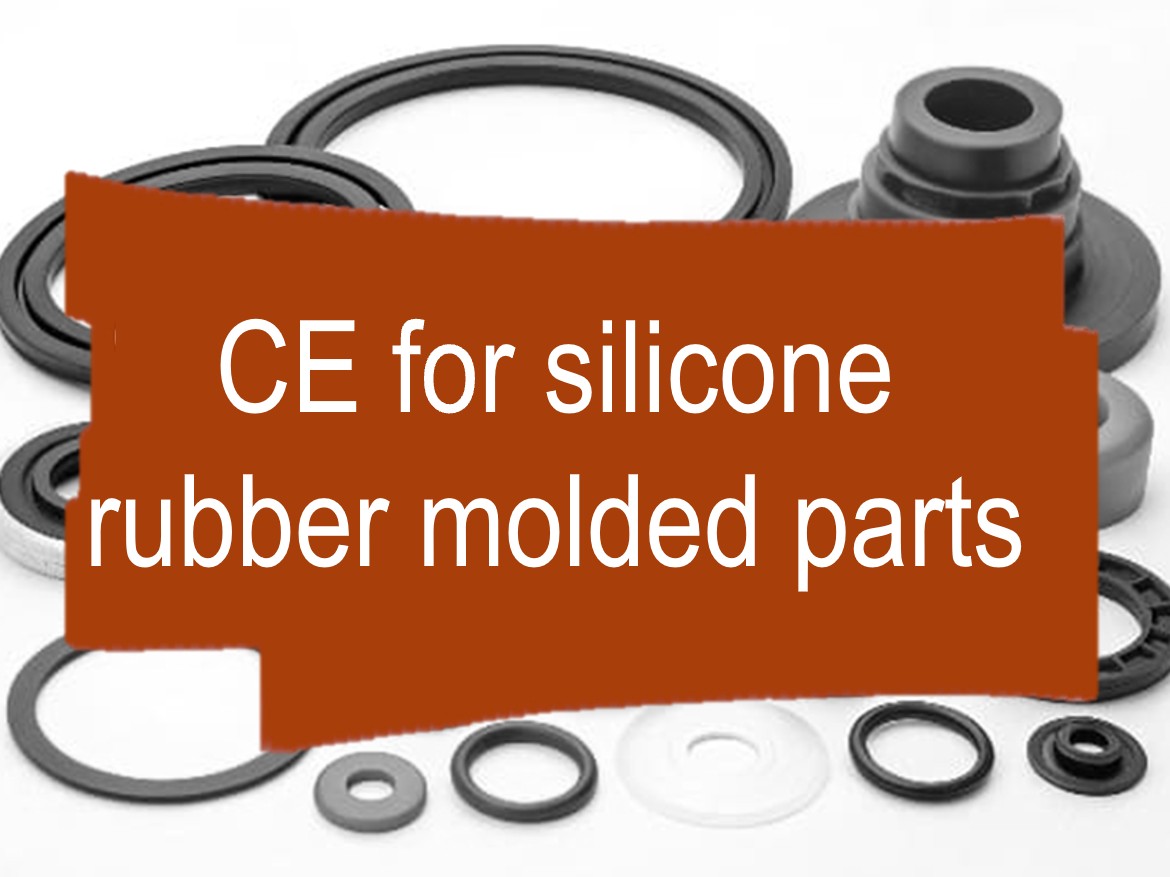
Product assessment for silicone rubber mouldings
easyCE reviews RTV silicone rubber mouldings intended for industrial applications. The work addresses material composition, reaction-to-fire evidence and emissions into indoor air. Different formulations require clear documentation of the intended use and relevant performance evidence; the applicable construction-product route depends on the product and its technical specification.
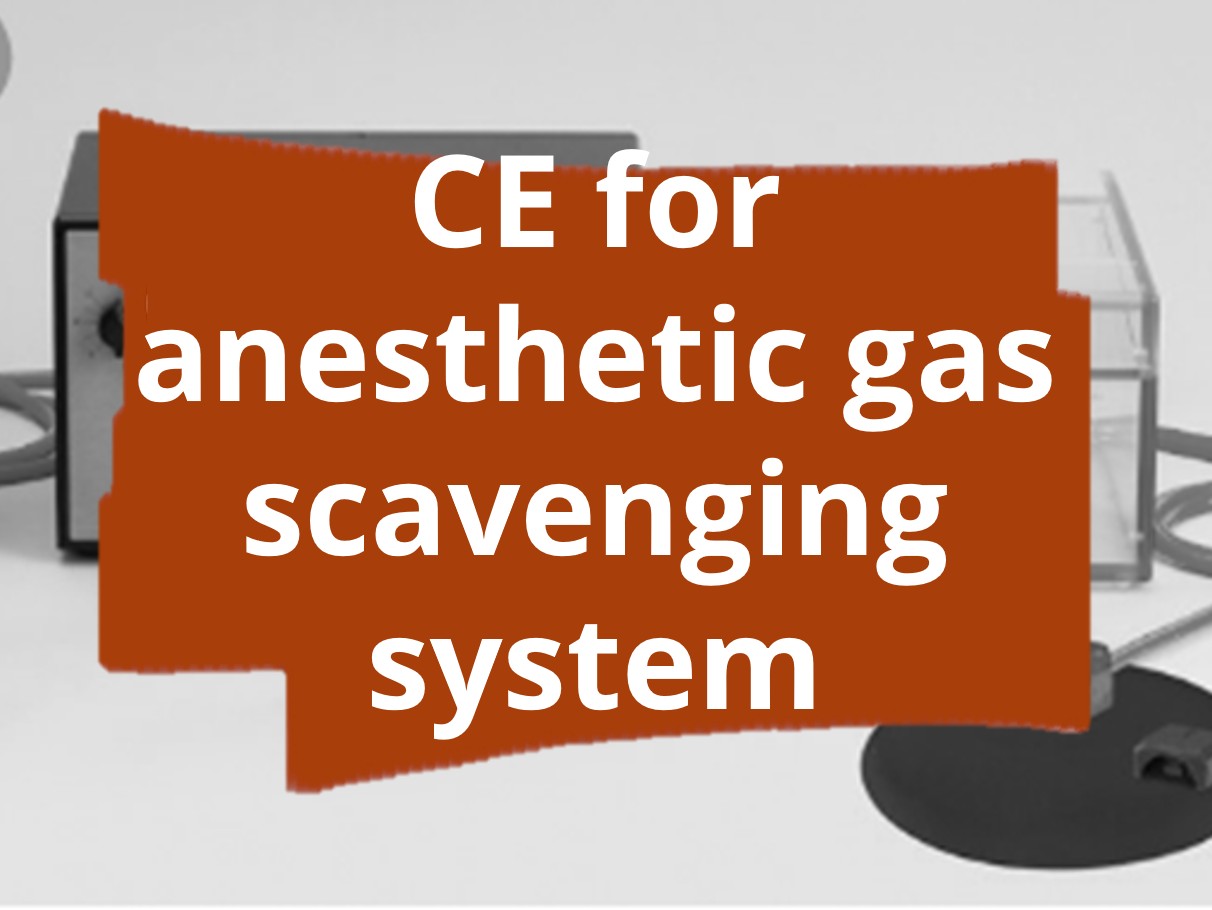
CE marking for an anaesthetic gas scavenging system
easyCE supported the conformity assessment and prepared a declaration ready to sign for an anaesthetic gas scavenging system. The assessment addressed the relevant safety and performance requirements in EN ISO 80601-2-13 and electrical safety with reference to EN 60601-1. The project included validation of gas extraction flow rates and documentation of the system's performance.
Conformity assessment for a dialysis water treatment system
easyCE supported the conformity assessment and prepared instructions for a permeate treatment system supplying water for dialysis equipment. The assessment considered the design measures and operating conditions needed to maintain water purity.
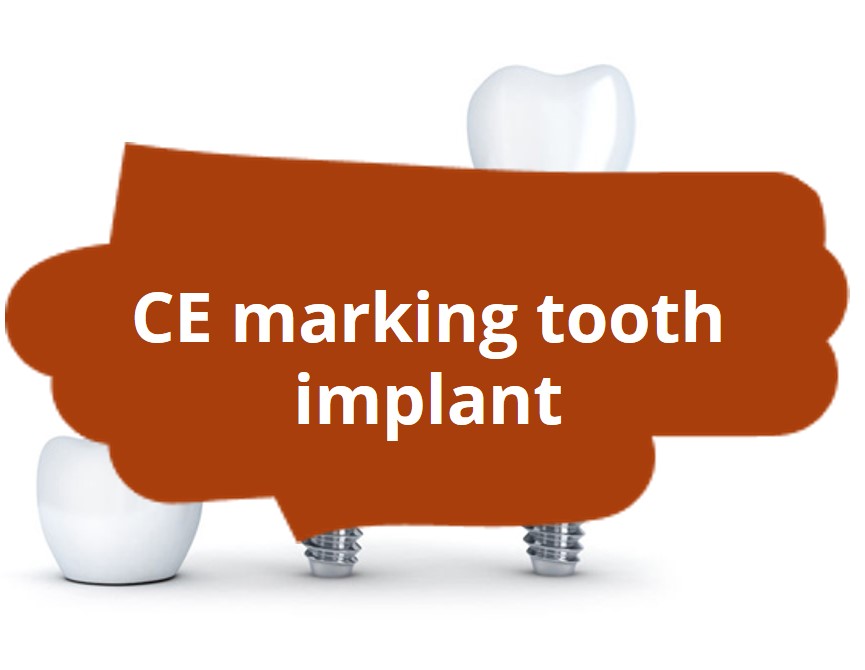
Technical requirements research for dental implants
easyCE researched technical requirements for a dental implant, including thread geometry, angles and material properties. The work addressed the information needed to assess design choices such as the use of titanium.
CE marking for horn spectacle frames and sunglasses
easyCE supported the conformity assessment of horn spectacle frames under the Medical Devices Regulation (EU) 2017/745 and sunglasses under the PPE Regulation (EU) 2016/425. We expanded the technical documentation, including the risk management and post-market surveillance plans.
Working with the customer, we reviewed the relevant general safety and performance requirements and the supporting design and manufacturing records.
We also assisted with the relevant registration processes, including EUDAMED actor registration for an SRN, the German DMIDS system and UDI assignment through IFA. These were separate tasks within the project.
Conformity documentation for a medical lubricant
In this historical project, easyCE assessed the requirements for a lubricant under the Medical Devices Directive 93/42/EEC and worked with the customer's existing quality management system. We prepared product-specific risk management records, hazard checklists, technical documentation and a declaration of conformity in German and English. The work also included documentation addressing the general safety and performance requirements in MDR Annex I.
Conformity assessment for a multi-drug test
easyCE reviewed the intended purpose of a multi-drug test and prepared the agreed conformity documentation. A test intended to examine human specimens for medical purposes is assessed under the IVDR; its classification depends on its intended use and the applicable rules. We prepared risk management and safety records, updated the technical documentation after design changes, coordinated with notified bodies and assisted with EUDAMED actor registration and UDI-related preparation.
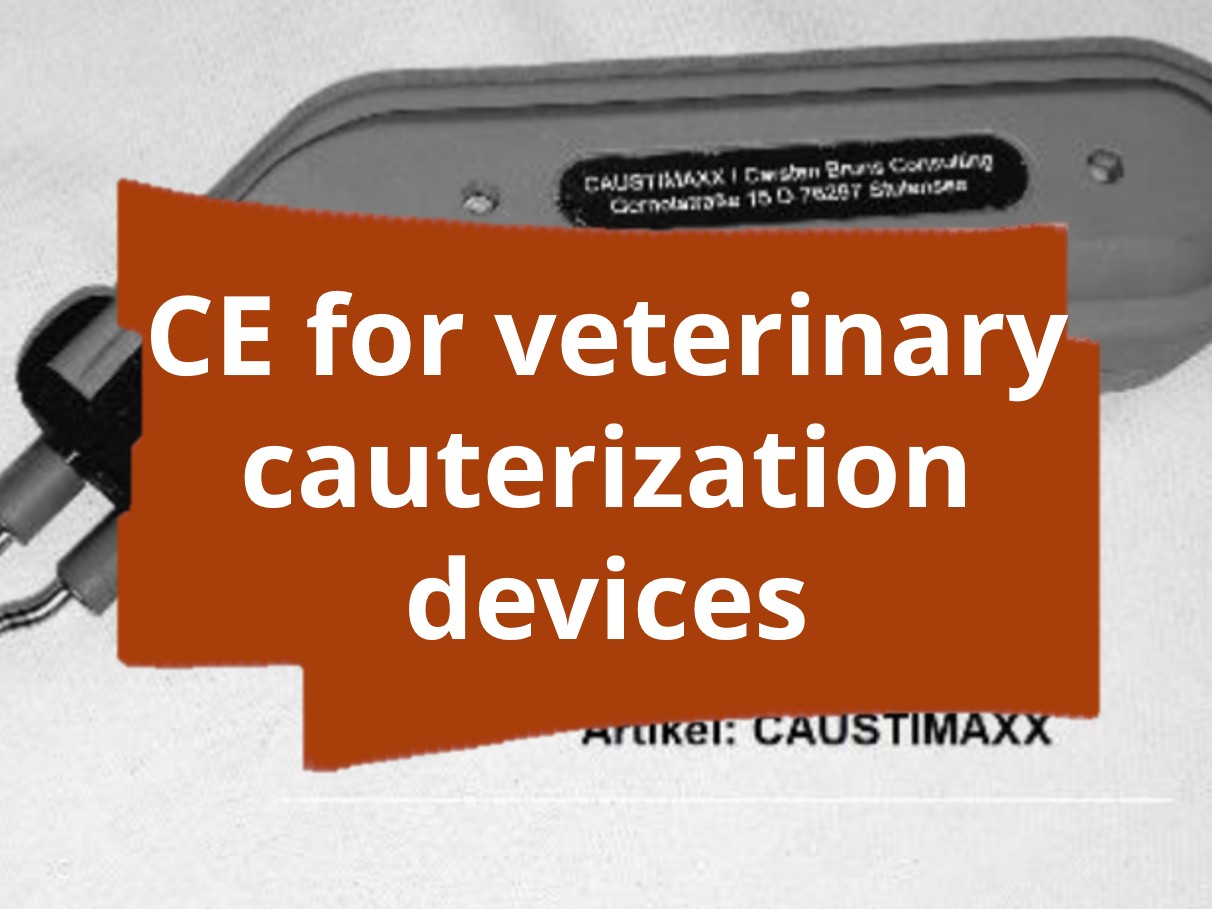
CE marking for veterinary cauterisation devices
easyCE supported the conformity assessment of handheld veterinary cauterisation devices and prepared a declaration of conformity ready to sign. The project addressed electrical safety with reference to EN 60335-1 and electromagnetic compatibility, including shielding and interference suppression measures. EN 55014-1 was considered for emissions. Veterinary use does not itself bring a product within the human medical device regulations.
Your project in three steps
Step 1
Discuss your product
Tell us about your product and request free initial advice. We identify the likely conformity requirements and the next steps for your project.
Step 2
Receive your proposal
We explain the required assessments and documentation, then prepare a proposal for the scope you need. You can commission a complete project or individual tasks.
Step 3
Your expert gets started
Your dedicated CE expert carries out the agreed engineering and documentation tasks and keeps you informed throughout the project. Follow-up questions can be discussed with the same expert.
Discuss your CE project
Product safety expertise

Willy Lebherz, Founder and Managing Director of easyCE
- Expert in product safety and conformity since 1995
- Recipient of the "Medal of the Order of Merit of the Federal Republic of Germany", awarded in 1983 by the then Federal President Carl Carstens
- Meister qualification in measurement and control technology
- Captain (ret.), Project Officer for Technical Logistics in the Army Material Office and Chief of the Telecommunications Repair Company
easyCE is an engineering consultancy specialising in product safety and conformity assessment. We help manufacturers, operators and suppliers assess products, reduce risks and prepare the documentation needed for market access. Our engineers identify applicable requirements, develop safety measures, prepare technical documentation and coordinate testing. You can commission the complete agreed process or selected tasks. Founded in southern Germany, easyCE works with clients internationally.
Technical expertise. Clear documentation. A defined route to conformity.