
Outdoor noise compliance sorted! With help from easyCE.
Get the noise assessment and documentation your outdoor equipment needs. easyCE identifies the applicable requirements, coordinates measurement planning and prepares the technical records and EC declaration of conformity.
Willy Lebherz
Founder and Managing Director of easyCE GmbH
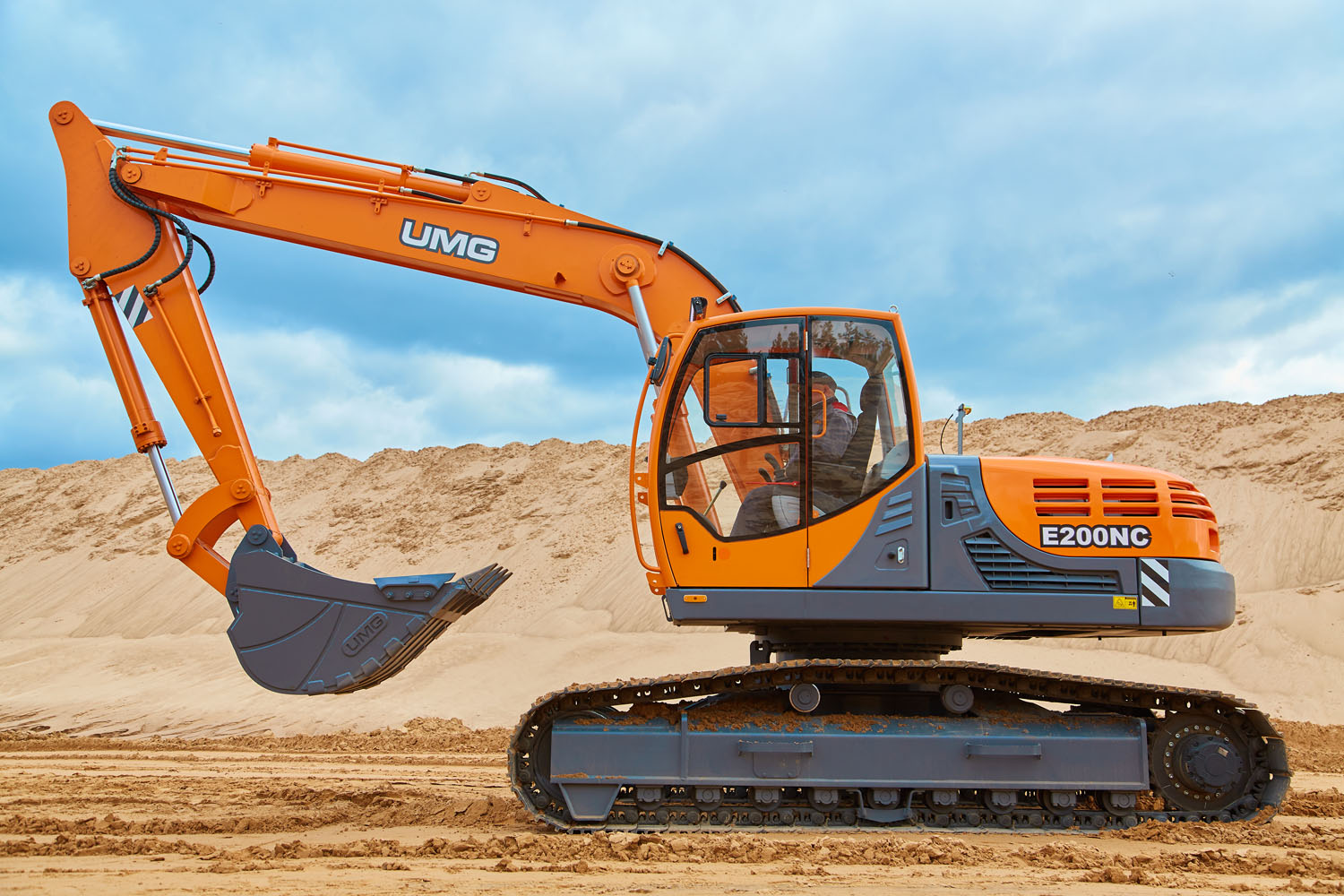
DoC ready to sign!
We prepare your declaration of conformity, ready for the responsible signatory.
Risk assessment completed!
We assess the relevant product risks and document the findings.
Applicable standards identified!
We identify the applicable noise measurement standards and prescribed test methods for your equipment.
Technical documentation created!
We prepare clear technical records and practical instructions for your product.
Ready for CE marking!
Once conformity has been demonstrated, the manufacturer signs the declaration and affixes the required marking.
Your role. Your CE responsibilities.
Manufacturers
The Outdoor Noise Directive 2000/14/EC regulates noise emitted into the environment by specified equipment for use outdoors. It covers 57 equipment types. Some are subject to noise limits as well as marking; others require noise marking without a limit under this directive.
These requirements apply alongside other relevant product legislation, including machinery legislation. The assessment must identify the correct equipment definition, measurement method, conformity procedure and guaranteed sound power level.
easyCE reviews your equipment and available measurements, coordinates the required technical assessment and prepares the agreed documentation. We distinguish the measured result from the guaranteed sound power level, which must account for measurement uncertainty and production variation.
Frequently asked questions
How does the Outdoor Noise Directive differ from machinery legislation?
Directive 2000/14/EC addresses environmental noise from specified outdoor equipment. Machinery legislation addresses machinery safety, including risks from noise and the information needed by users. Where both apply, both sets of requirements must be met.
The outdoor-noise assessment establishes the guaranteed sound power level and, for equipment listed in Article 12, checks the applicable limit. This is not interchangeable with an operator-position sound pressure measurement.
Why does the Outdoor Noise Directive matter?
The directive sets a common basis for assessing and marking outdoor-equipment noise. It helps purchasers compare equipment and supports efforts to reduce environmental noise. Manufacturers must use the applicable procedures and evidence, not simply add a noise label to an unassessed machine.
Which equipment is covered?
The directive identifies 57 equipment types through Annex I and Articles 12 and 13. Scope depends on the precise definition and intended use, not just the product name. It generally concerns complete equipment suitable for its intended use.
Article 12 includes equipment subject to noise limits and marking, such as:
- Combustion-engine construction hoists and winches; specified compaction equipment; compressors below 350 kW; hand-held concrete breakers and picks.
- Dozers, dumpers, hydraulic or rope-operated excavators, backhoe loaders, graders, bucket-type landfill compactors and loaders, within the stated 500 kW limits.
- Hydraulic power packs, specified lawnmowers and lawn trimmers or lawn-edge trimmers, combustion-engine counterbalanced lift trucks and motor hoes below 3 kW.
- Mobile cranes, tower cranes, specified road pavers, power generators below 400 kW and welding generators.
Article 13 covers equipment subject to noise marking without a limit under this directive, including:
- Combustion-engine aerial platforms, brush cutters, portable chainsaws, hedge trimmers, leaf blowers and collectors, grass trimmers, scarifiers and shredders.
- Electric construction hoists and winches; building-site band saws and circular saw benches; explosion rammers; concrete or mortar mixers and conveying or spraying equipment.
- Conveyor belts, drilling rigs, pile drivers, pipe layers, trenchers, joint cutters, road-milling machines, high-compaction road pavers and truck mixers.
- Vehicle refrigeration equipment, silo or tank loading equipment, glass-recycling containers, mobile waste containers, refuse-collection vehicles and sweepers.
- Combined high-pressure flushing and suction vehicles, high-pressure flushers and water-jet machines, suction vehicles and non-submersible water-pump units.
- Piste caterpillars, specified rotary snow-removal machines, certain counterbalanced lift trucks and power generators at or above 400 kW.
Use the exact definitions and qualifications in the directive to classify the product; these grouped examples are not a substitute for the scope assessment.
Which equipment is excluded?
The directive does not cover every machine that happens to be outdoors. Its scope and exclusions must be checked for the actual product.
- Equipment primarily intended to transport goods or people by road, rail, air or water is excluded. Listed working equipment mounted on a vehicle may still be covered for its working function.
- Equipment specifically designed and built for military, police or emergency-service purposes is excluded. Ordinary breakdown-assistance equipment is not automatically an emergency-service product.
- Permanently stationary installations and equipment intended for indoor use fall outside the definition of equipment for use outdoors. Temporary use in an enclosure or underground does not necessarily exclude equipment normally intended for outdoor use.
What must the manufacturer do before market entry?
Before the equipment is placed on the market or put into service, the manufacturer or its EU-established authorised representative must ensure that the applicable noise requirements are met.
- Complete the relevant conformity assessment procedure.
- Determine and document the guaranteed sound power level.
- Affix the CE marking and the guaranteed sound power indication.
- Supply the equipment with an EC declaration of conformity.
Does a noise label prove conformity?
Article 7 provides a presumption of conformity for equipment bearing the required CE marking and guaranteed sound power indication and accompanied by an EC declaration of conformity. The manufacturer must nevertheless have completed the assessment and retain the supporting evidence. Authorities can challenge non-compliant equipment.
Which conformity assessment procedures are available?
Article 12 equipment requires notified-body involvement. The manufacturer chooses an applicable procedure under Annex VI, VII or VIII. Article 13 equipment uses internal control of production under Annex V without mandatory notified-body involvement.
- Annex VI: internal control of production with assessment of technical documentation and periodic checking.
- Annex VII: unit verification of the individual equipment.
- Annex VIII: full quality assurance.
For Annex VI, prepare the technical records, measurement results and guaranteed-value calculation for notified-body assessment. The procedure also includes checks during production; it is not only a one-off document review.
What belongs in the technical documentation?
The records must demonstrate conformity and explain how the guaranteed sound power level was determined. The manufacturer must keep the required documentation available for inspection for the period specified by the chosen procedure.
- Manufacturer and, where applicable, authorised-representative details.
- Equipment description, make, commercial name, type, series and identification numbers.
- Relevant technical data, drawings and explanations.
- The applicable directive and the conformity assessment procedure.
- Noise measurement reports using the prescribed methods.
- The evaluation of measurement uncertainty and production variation used to determine the guaranteed sound power level.
For the production-control procedures, records are generally retained for ten years after the last equipment is manufactured. They must remain accessible to the competent authorities; electronic storage must preserve that accessibility.
How does unit verification work?
Under Annex VII, a notified body examines an individual item of equipment. The application includes the manufacturer's and any authorised representative's details, the technical documentation and confirmation that the same application has not been lodged elsewhere.
- The notified body checks the equipment against the technical documentation.
- It agrees the test location and carries out or arranges the required noise measurements.
- If the equipment meets the requirements, it issues the certificate of conformity specified by the directive. A refusal must be explained.
The manufacturer or authorised representative keeps the certificate with the technical documentation for ten years after the equipment is placed on the market.
What does full quality assurance involve?
Annex VIII covers an approved quality system for design, manufacture, final inspection and testing. The notified body assesses and monitors that system to confirm that it delivers equipment meeting the directive's requirements.
This does not remove the manufacturer's duty to assess each equipment type and maintain technical evidence. For Article 13 equipment, Annex V internal control of production applies instead: the manufacturer documents the assessment, issues the declaration and applies the required markings.
What must the EC declaration of conformity contain?
The document under Directive 2000/14/EC is an EC declaration of conformity. Annex II specifies its contents, including:
- Manufacturer or authorised-representative details and the person holding the technical documentation.
- A description identifying the equipment.
- The conformity assessment procedure and any relevant notified-body details.
- The measured sound power level and the guaranteed sound power level.
- A statement of conformity with this directive and references to any other applicable directives.
- The place and date of issue and details of the authorised signatory.
The declaration accompanies the equipment and must meet the applicable language requirements. The former obligation to send copies for the EU noise database ceased on 29 November 2025; this did not remove the declaration or documentation duties.
How must the CE and sound power markings look?
Use the prescribed CE proportions and the guaranteed sound power pictogram. Both must be visible, legible and indelible on the equipment.

The CE marking normally has a minimum height of 5 mm. The sound power indication shows the guaranteed value in dB with LWA and the prescribed symbol.
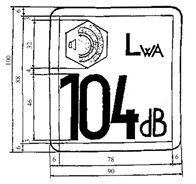
Keep the proportions shown in Annex IV when resizing. The sound power indication should be at least 40 mm high where possible.
Which noise-measurement methods apply?
Use the equipment-specific measurement provisions in Annex III, rather than selecting an acoustics standard solely because it appears relevant. Delegated Regulation (EU) 2024/1208 updated these methods and generally applies from 22 May 2025.
The prescribed methods refer to standards such as ISO 3744 and equipment-specific test codes. Other standards may help with noise declarations or machinery assessments, but they do not automatically replace the statutory outdoor-noise test method. Check the applicable Annex III version and any transitional exceptions for the equipment concerned.
Trusted by leading businesses. Chosen for results.














Your CE project. Expertly handled.
Scroll horizontally to compare the options.
Approach to CE marking
How the service works
Scope of support
Project contact
Product-specific assessment by experienced engineers
Engineering expertise combined with digital workflows
A complete project or selected tasks
A dedicated expert for your project
Other service providers
Approach depends on the provider and agreed scope
Processes vary between providers
Services depend on the provider and contract
Contact arrangements vary
CE software
Guided workflows based on the software functions
Your team enters information and assesses the results
Scope depends on the available modules
Technical support depends on the subscription
Practical engineering expertise
Successful projects. Results that speak for themselves.

CE marking for mini excavators used in earthmoving
easyCE supports the CE marking process for mini excavators used to move soil, gravel and ballast, including preparation of the declaration of conformity. The risk assessment under EN ISO 12100 covered multiple model variants, including machines with telescopic undercarriages and swing booms. The work also addressed the safety-related control requirements of EN ISO 13849-1 for the different configurations.
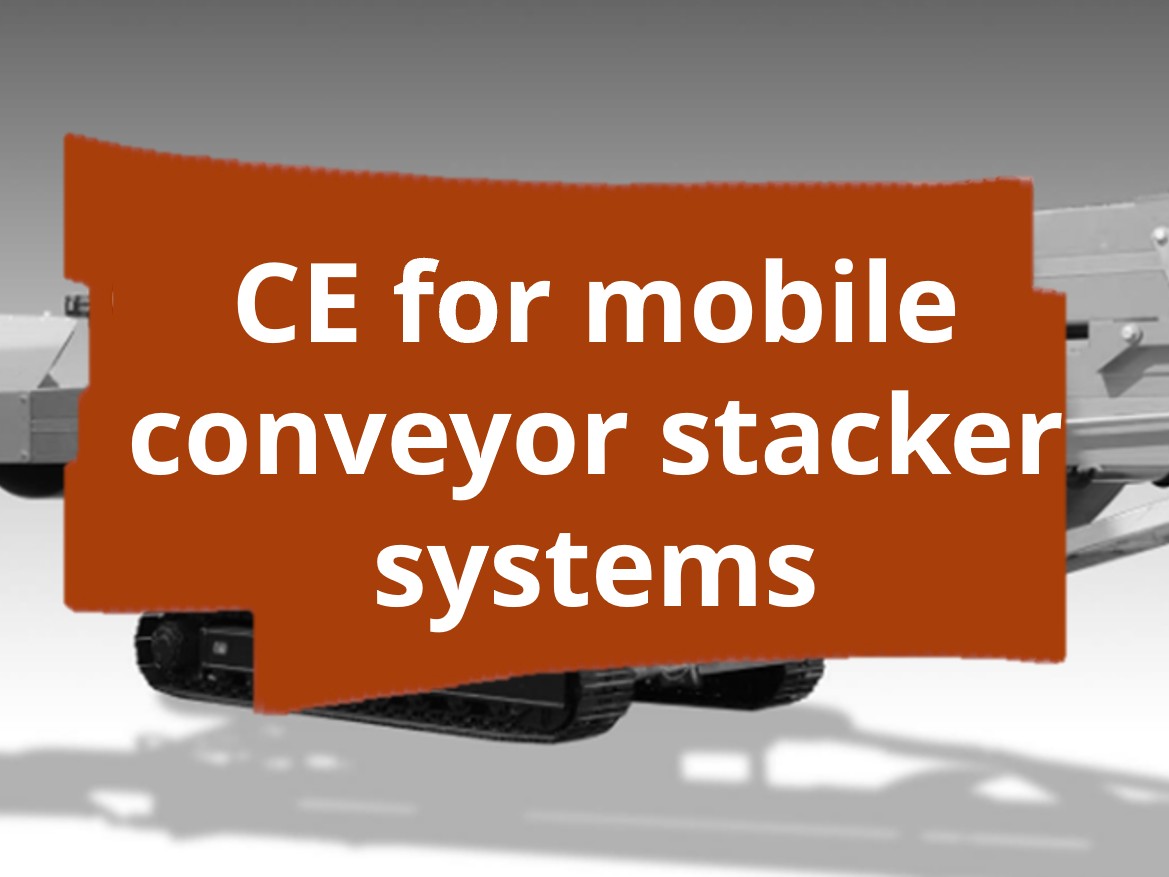
CE marking for mobile conveyor stacker systems with remote control
easyCE supports the CE marking process for a mobile conveyor stacker system, including a declaration of conformity ready to sign. The safety design needed to address both local and remote operation. A risk assessment in accordance with EN ISO 12100 identified hazards and the protective measures needed. The work covered safety-related controls under EN ISO 13849-1 and emergency stop functions in both operating modes under EN 60204-1.
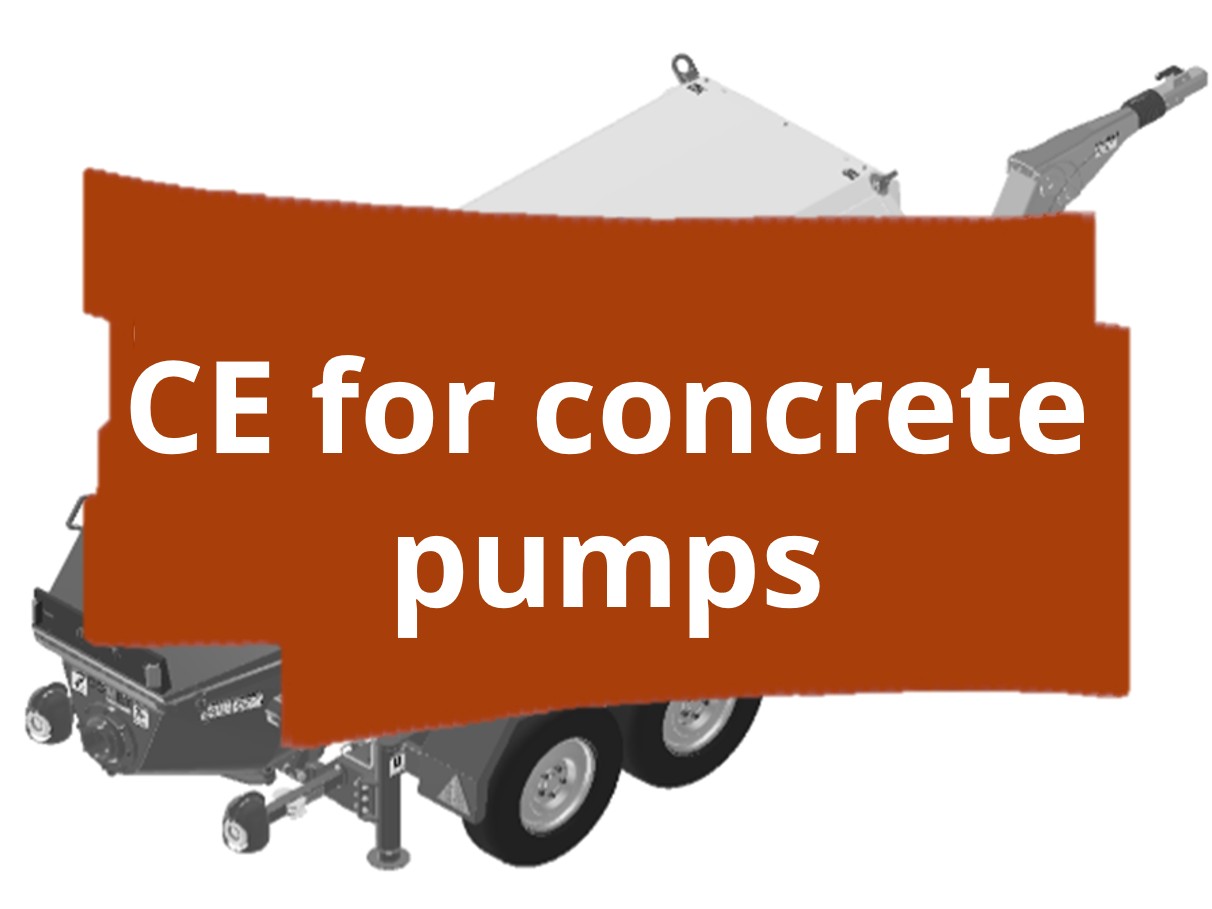
CE marking for trailer-mounted concrete pumps
easyCE assesses trailer-mounted concrete pumps for the European market. The work includes risk assessment, review of protective measures and preparation of the conformity documentation. Particular attention is given to machinery-specific requirements under EN 12001 and hydraulic-system safety under EN ISO 4413.
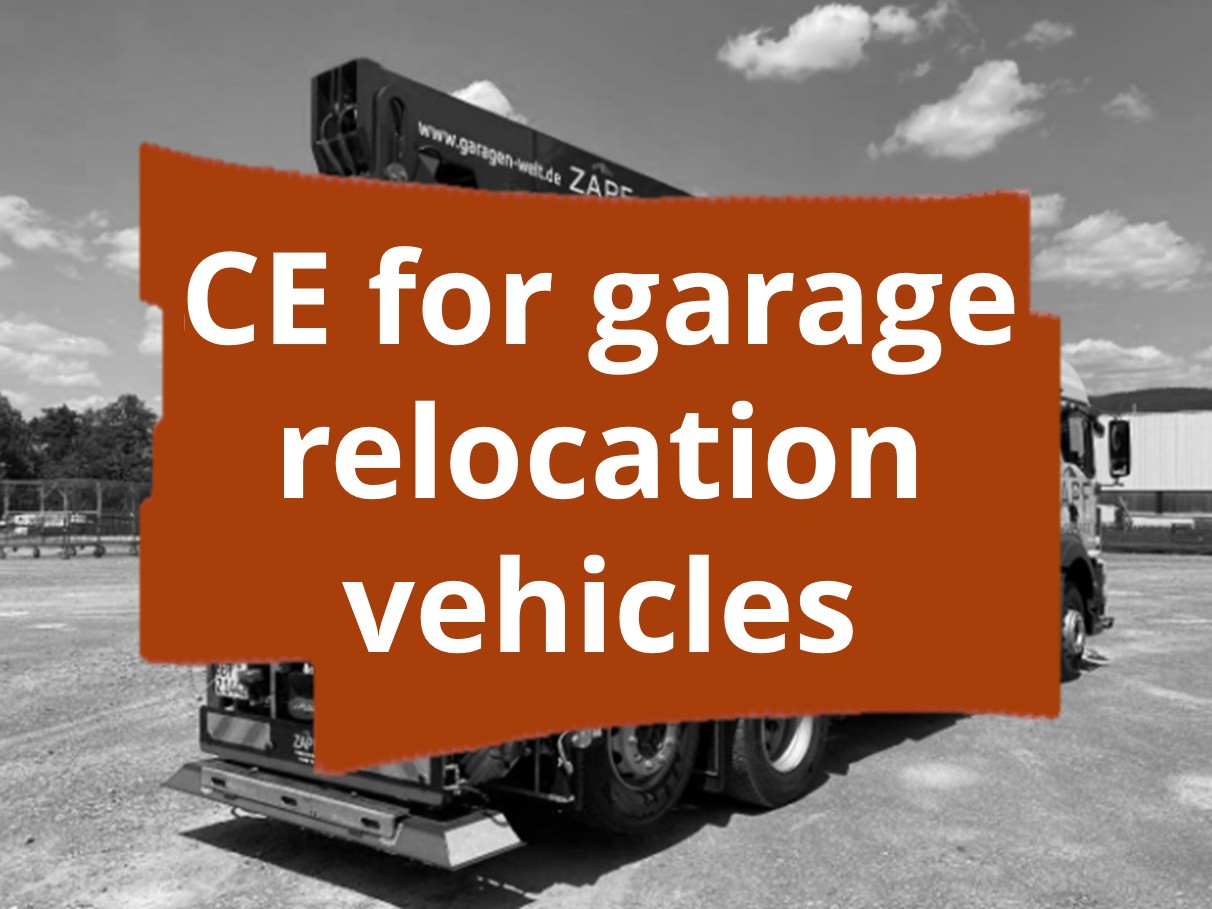
CE marking for garage relocation equipment
easyCE assesses the machinery on a specialist garage relocation vehicle with hydraulic lifting equipment. The work focuses on stability with off-centre loads and overload monitoring. Risk assessment under EN ISO 12100 supports the protective measures and technical documentation for the equipment.
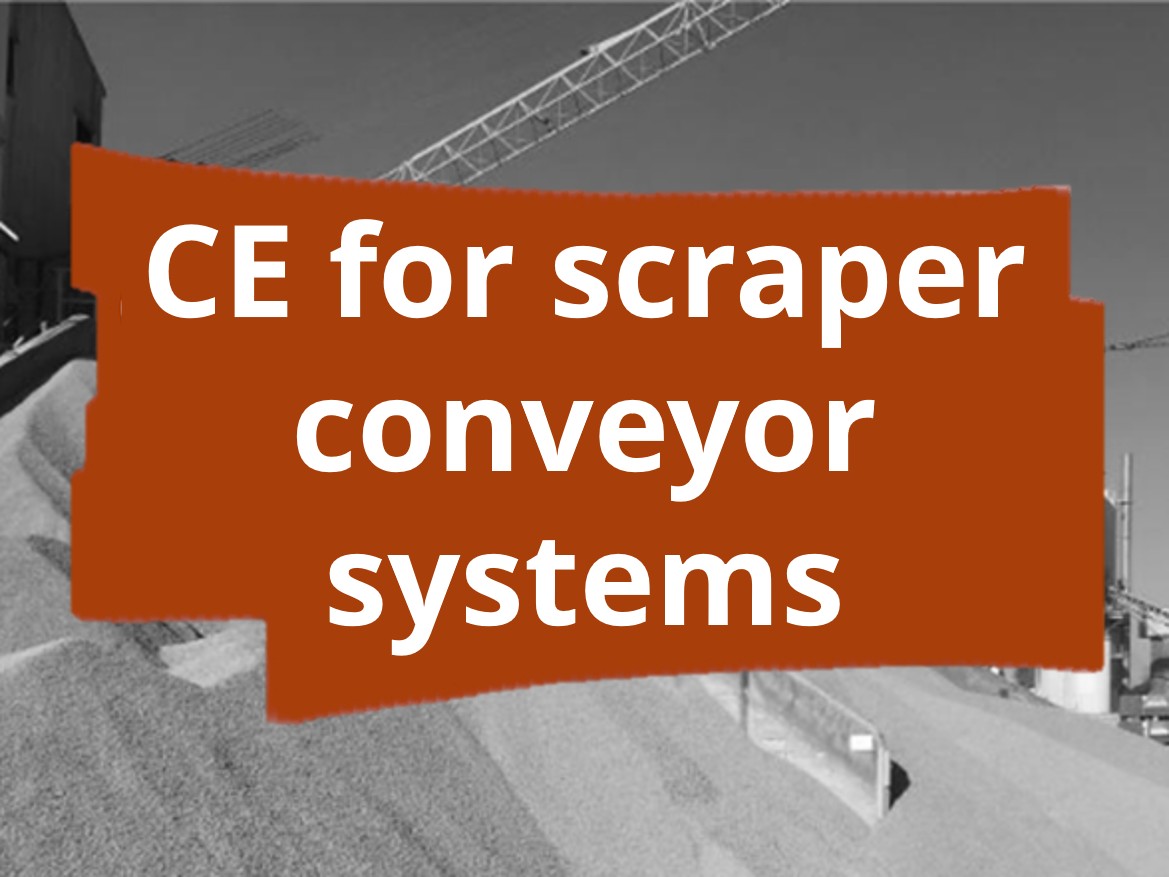
CE marking for scraper conveyor systems in the construction industry
easyCE supports the CE marking process for scraper conveyors that move dry or moist bulk materials, including preparation of the declaration of conformity. The risk assessment under EN ISO 12100 focused on safe access to the material bays and interfaces with delivery vehicles. The work also addressed a safety-related control system under DIN EN 12629-1 to protect personnel while keeping the system efficient to operate.
CE marking for compact mini excavators
easyCE supports the CE marking process for compact mini excavators, including preparation of the declaration of conformity. The assessment covered safety-related machine controls under EN ISO 13849-1 and hydraulic systems under EN ISO 4413. Particular attention was given to preventing hazards caused by sudden movements or a loss of hydraulic pressure.
CE marking for mobile concrete pumps
easyCE supports the CE marking process for mobile concrete pumps with hydraulic drives, including preparation of the declaration of conformity. The assessment covered emergency stop functions and interlocks under EN ISO 13849-1. The risk assessment under EN ISO 12100 focused on the load-sensing hydraulic system and overload protection, alongside the requirements of EN 12001 for concrete conveying and distribution machinery.
Your project in three steps
Step 1
Discuss your product
Tell us about your product and request free initial advice. We identify the likely conformity requirements and the next steps for your project.
Step 2
Receive your proposal
We explain the required assessments and documentation, then prepare a proposal for the scope you need. You can commission a complete project or individual tasks.
Step 3
Your expert gets started
Your dedicated CE expert carries out the agreed engineering and documentation tasks and keeps you informed throughout the project. Follow-up questions can be discussed with the same expert.
Discuss your CE project
Product safety expertise

Willy Lebherz, Founder and Managing Director of easyCE
- Expert in product safety and conformity since 1995
- Recipient of the "Medal of the Order of Merit of the Federal Republic of Germany", awarded in 1983 by the then Federal President Carl Carstens
- Meister qualification in measurement and control technology
- Captain (ret.), Project Officer for Technical Logistics in the Army Material Office and Chief of the Telecommunications Repair Company
easyCE is an engineering consultancy specialising in product safety and conformity assessment. We help manufacturers, operators and suppliers assess products, reduce risks and prepare the documentation needed for market access. Our engineers identify applicable requirements, develop safety measures, prepare technical documentation and coordinate testing. You can commission the complete agreed process or selected tasks. Founded in southern Germany, easyCE works with clients internationally.
Technical expertise. Clear documentation. A defined route to conformity.