International product compliance sorted! With help from easyCE.
Take your product into new markets with a clear compliance plan. Our experts identify the destination’s requirements, check which test results can be recognised and coordinate the assessment and documentation. You receive a practical route to market, with the technical evidence your project needs.
Willy Lebherz
Founder and Managing Director of easyCE GmbH

International market access!
Get a clear assessment of the requirements that apply in your target market.
Recognition opportunities identified!
We check whether an agreement covers your product, its assessment route and the proposed assessment body.
Market requirements clarified!
We identify the destination’s technical rules, marking requirements and responsibilities.
Technical documentation prepared!
We prepare the agreed technical records and clarify the destination’s language and documentation requirements.
International compliance. The essentials.
Know which evidence your destination market will accept.
A mutual recognition agreement can allow an assessment body in one territory to assess products against another territory’s requirements. Recognition applies to the sectors, procedures and designated bodies covered by that agreement. It does not make CE marking a universal market-access approval or remove the destination’s product rules.
easyCE reviews your product, target market and existing evidence, then identifies the assessment route and any additional testing, documentation or local representation needed. Where an MRA applies, we help you use it effectively. Your team gets a defined plan and coordinated technical support for the next steps.
Get expert support now!
FAQ
What is a mutual recognition agreement?
A mutual recognition agreement, or MRA, sets conditions for accepting specified conformity assessment results from the other party’s designated assessment bodies. Depending on its scope, it may cover testing, inspection or certification.
The product must still meet the destination market’s requirements. Recognition concerns the agreed assessment work; it is not a general exemption from local rules and does not create a universal “MRA certificate”.
How can an MRA help your product reach a new market?
An applicable MRA can make it possible to complete assessment work closer to where your product is developed or manufactured. This can reduce duplicated testing and simplify coordination with the assessment body.
The benefit depends on the product, sector and recognised scope. We check those conditions before you commission tests, so your team knows which existing records can be reused and which additional evidence is needed.
What does a conformity assessment body do under an MRA?
A conformity assessment body, or CAB, performs the testing, inspection or certification for which it is designated. Under an MRA, its recognised results can demonstrate compliance with the other party’s specified requirements.
Designation is specific to the agreement and technical scope. Accreditation alone does not establish recognition under every MRA, and a body described as “notified” in the EU does not automatically have authority for every overseas assessment. Check the body’s current designation and relevant product coverage.
Which countries have conformity assessment agreements with the EU?
The European Commission’s directory covers arrangements with Australia, Canada, Israel, Japan, New Zealand, Switzerland and the United States. Their scope differs substantially between countries and sectors.
The existence of an agreement is only the starting point. Confirm that the relevant sector is operational, the product is covered and the assessment body has the required designation. Country-specific arrangements are outlined below.
Where can you find the agreements and recognised assessment bodies?
Use the European Commission’s MRA directory to find agreement texts, sector information and the relevant assessment-body lists. For Canada, the conformity assessment protocol forms part of CETA.
Select the destination country, check the sectoral annex and confirm the body’s current recognised scope before placing an order. Older agreement titles may use product terminology that has since changed, so the applicable legislation and implementation status also need checking.
What does the agreement between the EU and Australia cover?
Its sectoral scope includes automotive products, electromagnetic compatibility, low-voltage equipment, machinery, medical devices, pressure equipment, telecommunications terminal equipment and good manufacturing practice for medicines.
Each sector has its own conditions. A reference to a sector does not mean that every product or procedure is currently covered. Check the applicable annex and the designated Australian or EU assessment body through the European Commission’s MRA directory.
What does the conformity assessment protocol between the EU and Canada cover?
The CETA protocol covers specified electrical and electronic equipment, radio and telecommunications equipment, EMC, toys, construction products, machinery, measuring instruments, hot-water boilers, ATEX equipment, outdoor noise equipment and recreational craft.
The protocol enables recognised bodies to assess conformity against the importing party’s requirements within their designated scope. Product classification, the relevant standards and the required testing or certification route still need to be established. The European Commission’s MRA directory links to the protocol and assessment-body lists.
What arrangements apply between the EU and Israel?
The MRA between the EU and Israel concerns good laboratory practice, or GLP. A separate Agreement on Conformity Assessment and Acceptance of Industrial Products, or ACAA, addresses pharmaceutical products.
These are specific arrangements, not general recognition of CE-marked goods. Identify whether your project concerns laboratory study data or the pharmaceutical requirements covered by the relevant agreement before relying on recognition. The European Commission’s MRA directory provides links to both frameworks.
Does GLP recognition establish product conformity?
No. Good laboratory practice concerns the organisation and conditions under which specified non-clinical safety studies are planned, performed, monitored, recorded and reported. Recognition can support acceptance of the resulting study data.
It does not by itself establish compliance with all product legislation, authorise a product for sale or replace a required declaration of conformity. We distinguish the evidence recognised under GLP from the remaining obligations for the finished product.
What does the agreement between the EU and Japan cover?
The agreement contains sectoral arrangements for electrical products, telecommunications terminal and radio equipment, good manufacturing practice for medicinal products and good laboratory practice for chemicals.
Their requirements and recognition mechanisms differ. For a product assessment, check the relevant sectoral annex and the current designation of the proposed body through the European Commission’s MRA directory. Recognition in one sector does not extend automatically to another.
What does the agreement between the EU and New Zealand cover?
Its sectoral scope includes EMC, low-voltage equipment, machinery, medical devices, pressure equipment, telecommunications terminal equipment and good manufacturing practice for medicinal products.
Confirm the relevant annex, applicable product requirements and current recognised scope before commissioning assessment work. The European Commission’s MRA directory links to the agreement and assessment bodies designated by New Zealand and the EU Member States.
What needs particular attention for Switzerland?
The MRA between the EU and Switzerland is organised into sectoral chapters, including machinery, PPE, toys, gas appliances, pressure equipment, electrical and radio equipment, measuring instruments, construction products, lifts, cableways and civil explosives. It also contains chapters addressing vehicles, laboratory practice, medicines and other specialised areas.
Coverage must be checked against the current legal framework for the product. In particular, the medical-device chapter has not been updated to cover the EU MDR and IVDR, so it must not be treated as automatic mutual market access for those devices.
Use the European Commission’s MRA directory for the relevant chapter and assessment-body lists, together with Swissmedic’s current medical-device guidance where applicable. Local representation, registration and documentation requirements need their own review.
What arrangements apply between the EU and the United States?
The EU and the United States have sector-specific conformity assessment arrangements, including telecommunications equipment and EMC. Marine equipment is addressed by a separate mutual recognition agreement, while medicines have their own inspection-related arrangements.
There is no general acceptance of CE marking as proof that a product meets US requirements. Check the actual operational sector, recognised body and applicable federal, state and workplace requirements for your product. The European Commission’s MRA directory provides the relevant agreement and designation links.
What if your destination has no applicable MRA?
Assess the product against that market’s own rules. Existing CE documentation and test results may still be useful, but their acceptance must be confirmed with the competent authority or assessment body where required.
Additional tests, registrations, certification, local representation, markings or translated instructions may be needed. easyCE compares the existing evidence with the destination’s requirements and prepares a practical plan to close the gaps.
What are the limits of mutual recognition?
An MRA only covers the sectors, procedures and conditions stated in the agreement. It does not remove technical requirements, customs formalities or other obligations that fall outside that scope.
It should also not be confused with the EU principle of mutual recognition for goods lawfully marketed in another Member State. That principle concerns goods not fully covered by harmonised EU rules and operates under a different framework.
How does easyCE put an MRA to work for your project?
We begin with the product, destination market and existing technical evidence. We then establish whether a recognition route is available and identify the assessment body and outstanding technical work.
You receive a defined scope covering the necessary tests, documentation and market-specific actions. Our experts coordinate the agreed work and keep the assessment requirements connected to your product design, so recognition is used where it genuinely helps the project.
Trusted by leading businesses. Chosen for results.














With easyCE, product compliance is really ‘easy’
Scroll horizontally to compare the options.
Approach to CE marking
Flexibility of support
Scope of support
Your project contact
A clear, practical assessment of your product
Expert delivery tailored to your project
The full process or the individual tasks you need
A dedicated CE expert who coordinates your project
Other CE service providers
Approach and project fit depend on the provider
Processes and flexibility depend on the provider
Scope agreed with the provider
Contact arrangements agreed for the project
CE software
A standardised workflow that your team adapts to the project
Your team manages the software and carries out the assessment
Features depend on the software and the modules purchased
Technical project support may require an additional service
Expert assessment. Clear documentation. Practical results.
Successful projects. Proven expertise.
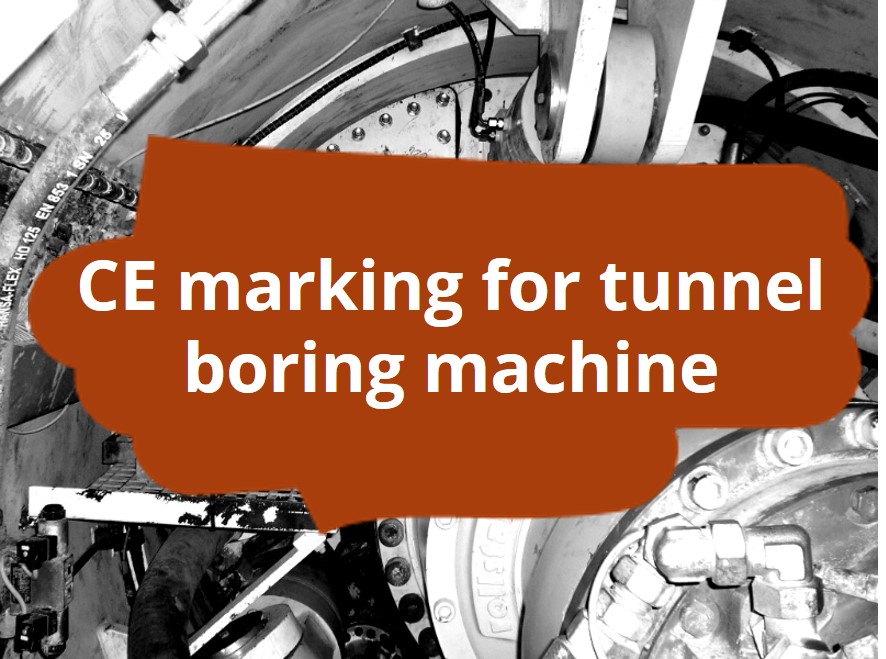
CE marking for a tunnel boring machine used in Australian copper mining
easyCE carries out the conformity assessment for a tunnel boring machine, including risk assessment across its lifecycle and preparation of a declaration of conformity ready to sign. The assessment focused on the new multi-arm cutting-head concept. The work also considered the applicable Australian safety and technical requirements, in close cooperation with the manufacturer and its Australian customer.
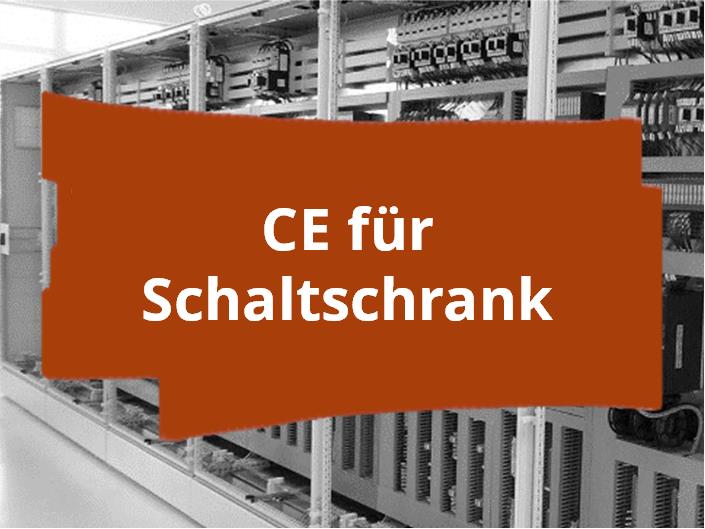
CE marking for control cabinets
easyCE supports the conformity assessment for control cabinets, including risk assessment and preparation of a declaration of conformity ready to sign. The assessment considered the Machinery, EMC and Low Voltage Directives, alongside DIN EN 60204-1:2019-06 and DIN EN IEC 61439-1:2021-10. The work also included a checklist to help select suppliers and components that meet the project's specific requirements.

CE marking for a mobile satellite communications system
easyCE supports the conformity assessment of a mobile satellite communications system, including risk assessment, EMC review and preparation of a declaration of conformity ready to sign. The system routes TCP/IP data redundantly through two or more satellite antennas. It is designed for rapid deployment where a mobile communications link is needed over long distances.
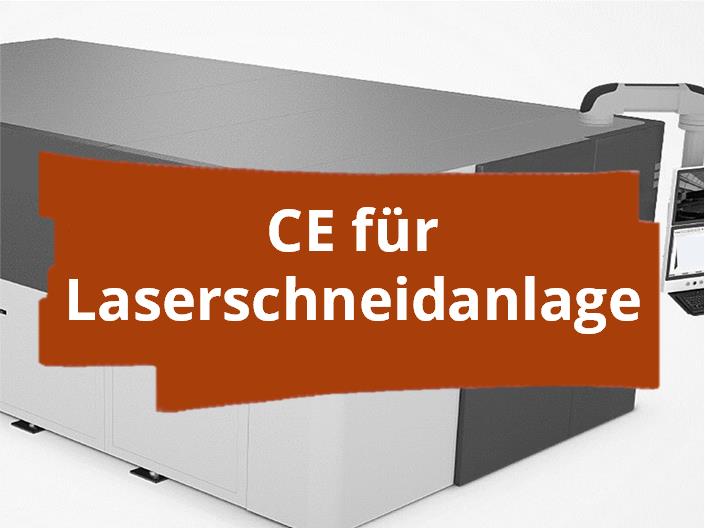
CE marking and declaration of conformity for a 2D laser cutting system
easyCE supports the full conformity assessment for a 2D laser cutting system with an automatic pallet changer. The work included coordinating the safety concept and two-beam light barrier, determining the performance level, analysing the product and carrying out a risk assessment in accordance with EN ISO 12100. Particular attention was needed for the cutting head's support structure and the movements of the pallet changer and cutting head. Laser protection screens, safety devices and a complete enclosure shield operators from the Class 4 laser cutting process inside the cabin, with Class 1 laser conditions outside the machine.
Your international project in three steps
Step 1
Get free initial advice
Tell us what your product does, where you plan to sell it and which documents you already have. Our expert will discuss the requirements and next steps with you, free of charge.
Step 2
Receive your proposal
We set out the work your project needs and provide a clear proposal. Discuss the scope, ask questions and choose the level of service that suits your business.
Step 3
Your expert delivers
Your dedicated CE expert carries out the agreed assessment and documentation work and stays with you throughout the project. After completion, your expert remains available for follow-up questions.
Your international project. Expertly delivered.
Expertise in product safety and compliance

Willy Lebherz, Founder and Managing Director of easyCE
- Expert in product safety and conformity since 1995
- Recipient of the "Medal of the Order of Merit of the Federal Republic of Germany", awarded in 1983 by the then Federal President Carl Carstens
- Meister qualification in measurement and control technology
- Captain (ret.), Project Officer for Technical Logistics in the Army Material Office and Chief of the Telecommunications Repair Company
easyCE specialises in product safety and conformity assessment. Our engineers carry out risk assessments, identify applicable requirements, prepare technical documentation and coordinate the necessary tests. Choose the complete process or individual tasks, with a dedicated CE expert as your point of contact. Founded in southern Germany, we work with customers worldwide.
You focus on your product. We take care of the conformity work.