CE marking for non-automatic weighing instruments done! With easyCE expert support.


Put your weighing instrument on a clear path to conformity. easyCE identifies the applicable requirements, coordinates the necessary assessments and prepares your technical documentation and declaration of conformity, ready to sign.
Willy Lebherz
Founder and Managing Director of easyCE GmbH

DoC ready to sign!
We prepare your declaration of conformity, ready for the responsible signatory.
Risk assessment completed!
We assess the relevant product risks and document the findings.
Applicable standards identified!
We identify the relevant harmonised standards and check their scope, current references and any restrictions for your product.
Technical documentation created!
We prepare clear technical records and practical instructions for your product.
Ready for CE marking!
Once conformity has been demonstrated, the manufacturer signs the declaration and affixes the required marking.
Your role. Your CE responsibilities.
Manufacturers
Directive 2014/31/EU covers non-automatic weighing instruments, which require an operator to intervene during weighing. The intended use determines which requirements apply. Instruments used for regulated purposes, such as commercial transactions or medical weighing, must meet the essential requirements and follow the prescribed conformity assessment procedure.
Other uses, such as ordinary domestic kitchen or bathroom weighing, are treated differently under this directive. Do not assume that every scale requires CE marking and the supplementary metrology marking under the same rules. Other applicable product legislation must also be considered.
easyCE reviews the instrument, intended use and available test evidence. We identify the assessment route, coordinate the necessary technical input and prepare the agreed documentation. For other destination markets, we assess the relevant marking requirements separately.
Frequently asked questions
What is a non-automatic weighing instrument?
A weighing instrument determines mass using the action of gravity. It may also determine related quantities or characteristics. A non-automatic instrument requires an operator to intervene during the weighing operation.
Which uses are regulated by Directive 2014/31/EU?
The directive covers all non-automatic weighing instruments, but the essential requirements and CE/metrology marking provisions apply to the six regulated uses in Article 1(2)(a) to (f):
- Determining mass in commercial transactions.
- Calculating tolls, tariffs, taxes, bonuses, penalties or similar payments.
- Applying legislation or regulations, or providing expert evidence in court proceedings.
- Weighing patients for medical monitoring, diagnosis or treatment.
- Preparing medicines on prescription in a pharmacy and determining mass in medical or pharmaceutical laboratory analyses.
- Determining a price by mass for direct sales to the public and making up prepackages.
Other uses fall under Article 1(2)(g) and have different requirements under this directive.
Who is the manufacturer?
The manufacturer makes an instrument, or has it designed or manufactured, and markets it under its own name or trade mark. This role carries responsibility for the applicable conformity requirements, even when production is outsourced.
What is required when importing instruments into the EU?
An importer must check that the instrument meets the requirements applicable to its intended use. For regulated uses, this includes checking that the manufacturer has completed the conformity assessment, prepared the technical documentation and supplied the required CE and supplementary metrology markings and accompanying documents.
What identification must an importer provide?
The importer must provide its name or registered trade name or trade mark and a contact postal address. These details normally appear on the instrument. Where this would require opening the packaging solely to add them, the directive allows them on the packaging or an accompanying document.
Why is an EU declaration of conformity required?
For instruments intended for regulated uses, the manufacturer issues an EU declaration of conformity after conformity has been demonstrated. It identifies the instrument and the applicable legislation and records the manufacturer's responsibility. Harmonised standards are voluntary; references describe the standards or other technical specifications actually used.
What is an authorised representative?
An authorised representative is a person or organisation established in the EU with a written mandate from the manufacturer to perform specified tasks. The mandate does not transfer the manufacturer's responsibility for design and manufacture or its obligation to draw up the technical documentation.
What are the manufacturer's main obligations?
The obligations depend on the instrument's intended use. For the regulated applications, key tasks include:
- Designing and manufacturing the instrument to meet the essential requirements.
- Preparing technical documentation and completing the relevant conformity assessment.
- Issuing the EU declaration of conformity and affixing CE and supplementary metrology markings after conformity is demonstrated.
- Keeping the technical documentation and declaration for ten years after placing the instrument on the market.
- Maintaining conformity in series production and reviewing relevant design or specification changes.
- Providing traceable identification, manufacturer contact details, instructions and information in the required language.
What tasks can an authorised representative perform?
The written mandate must cover at least the following tasks for instruments intended for regulated uses:
- Keeping the EU declaration of conformity and technical documentation available to national authorities for ten years after the instrument is placed on the market.
- Providing the information and documents needed to demonstrate conformity following a reasoned request from an authority.
- Cooperating with authorities on action to eliminate risks posed by instruments covered by the mandate.
What are the metrological requirements?
Annex I covers units, accuracy classes, permissible errors, sensitivity, repeatability and other metrological characteristics. The applicable requirements depend on the instrument and its use.
- Use legally permitted mass units. These include kilogram, gram, milligram, microgram and tonne; troy ounces and metric carats are permitted for specified uses.
- Errors of indication must remain within the relevant limits for the accuracy class and load. Digital indications require the rounding error to be taken into account.
What design requirements apply?
The instrument must retain its metrological performance when correctly installed and used in its intended environment. Relevant design requirements include:
- Electronic instruments must either remain within the permitted error limits when exposed to disturbances or detect and indicate significant faults.
- Connected equipment must not adversely affect the instrument's metrological characteristics.
- The design must discourage fraudulent use and minimise the possibility of accidental misuse. Components requiring protection against adjustment must be secured.
- Printed results must be clear, correctly identified, unambiguous and durable.
- Where necessary, a levelling device and a sufficiently sensitive level indicator must enable correct installation.
Which instruments are non-automatic?
Examples include retail scales, weighbridges, laboratory balances and domestic scales where the weighing operation requires operator intervention. Classification depends on how the instrument operates, not simply its commercial name.
- Retail and industrial scales.
- Weighing systems used at supermarket checkouts.
- Weighbridges.
- Laboratory and pharmaceutical balances.
- Kitchen and bathroom scales, usually intended for uses outside the six regulated categories.
What belongs in the technical documentation?
The documentation must make it possible to assess the instrument against the applicable requirements and explain its design, manufacture and operation. Depending on the assessment route, it includes:
- A general description and the intended use.
- Design and manufacturing drawings, component information and circuit diagrams.
- Explanations needed to understand the drawings and operation.
- The harmonised standards or other technical specifications used, including explanations of alternative solutions.
- Design calculations, examinations and assessment results.
- Test reports and other supporting evidence.
What is needed for quality-system assessment?
Where the selected conformity assessment module uses an approved quality system, the application to the notified body includes:
- The manufacturer's name and address and, where applicable, the authorised representative's details.
- Confirmation that the same application has not been lodged with another notified body.
- Relevant information about the instrument category and the quality-system documentation.
- The technical documentation for the approved type and its EU-type examination certificate, where applicable to the selected module.
What does CE marking mean?
CE marking indicates that the manufacturer has demonstrated conformity with the applicable EU legislation that requires the marking. For instruments in regulated uses under Directive 2014/31/EU, the CE marking is accompanied by supplementary metrology marking. It is not a general independent quality award.
How is an instrument prepared for CE marking?
Start by defining the intended use and selecting the applicable conformity assessment route. Prepare the design and technical evidence, arrange the required notified-body involvement and resolve any non-conformities before placing the instrument on the market. easyCE coordinates the agreed assessment and documentation tasks throughout the project.
How are CE and metrology markings applied?
For instruments intended for the regulated uses, the markings must be visible, legible and indelible on the instrument or its data plate before it is placed on the market.
- The supplementary metrology marking follows the CE marking. It consists of the letter M and the last two digits of the year of affixing, within a rectangle.
- The identification number or numbers of the notified bodies involved in the production-control phase follow the CE and metrology markings.
- Other markings may be added only if they do not impair the meaning, visibility or legibility of the required markings.
What must the EU declaration of conformity contain?
Annex IV specifies the declaration format. The declaration must identify the instrument and the legislation with which conformity is declared.
- The instrument model, type, batch or serial number and a traceable product description.
- The manufacturer's name and address and, where applicable, the authorised representative's details.
- A statement that the declaration is issued under the manufacturer's sole responsibility.
- The applicable EU legislation and the harmonised standards or other technical specifications used.
- Relevant notified-body and certificate details.
- The place and date of issue, the signatory's name and function, and the signature.
What must manufacturers do after the initial assessment?
Conformity must be maintained after the first assessment. Article 6 requires manufacturers to control series production and respond to relevant changes and product problems.
- Review changes to the instrument design, characteristics and referenced technical specifications.
- Maintain product identification and keep the required documentation available.
- Where appropriate to the risks, investigate complaints, sample instruments and record non-conformities or recalls.
- Take corrective action where an instrument does not comply and inform the relevant authorities where it presents a risk.
Is EU-type examination always required?
No. Article 13 provides several routes for instruments used for regulated purposes. EU-type examination, Module B, can be combined with production quality assurance, Module D, or product verification, Module F. Unit verification under Module G is an alternative.
EU-type examination is not compulsory for instruments without electronic devices whose load-measuring device does not use a spring to balance the load. The corresponding D1 or F1 procedure may then apply. Instruments intended only for other uses are subject to different requirements under this directive.
Are laboratory tests required?
The evidence and testing depend on the instrument and the selected conformity assessment route. Testing must demonstrate the relevant metrological and technical requirements; a generic laboratory certificate is not a substitute for the prescribed procedure.
- Technical documentation may include results from the manufacturer's laboratory or a laboratory working on its behalf.
- A notified body carries out, or arranges, the examinations and tests required by the selected module.
- The manufacturer and notified body agree the arrangements and location for the necessary tests.
When must a notified body be involved?
The conformity assessment routes in Article 13 for the six regulated uses involve a notified body. Its role may include type examination, instrument verification or quality-system assessment and surveillance, depending on the chosen module.
This requirement must not be extended automatically to instruments intended only for other uses under Article 1(2)(g). Other applicable product legislation may have its own assessment requirements.
Trusted by leading businesses. Chosen for results.














With easyCE, product compliance is really ‘easy’
Scroll horizontally to compare the options.
Approach to CE marking
How the service works
Scope of support
Project contact
Product-specific assessment by experienced engineers
Engineering expertise combined with digital workflows
A complete project or selected tasks
A dedicated expert for your project
Other service providers
Approach depends on the provider and agreed scope
Processes vary between providers
Services depend on the provider and contract
Contact arrangements vary
CE software
Guided workflows based on the software functions
Your team enters information and assesses the results
Scope depends on the available modules
Technical support depends on the subscription
Practical engineering expertise
Successful projects. Results that speak for themselves.
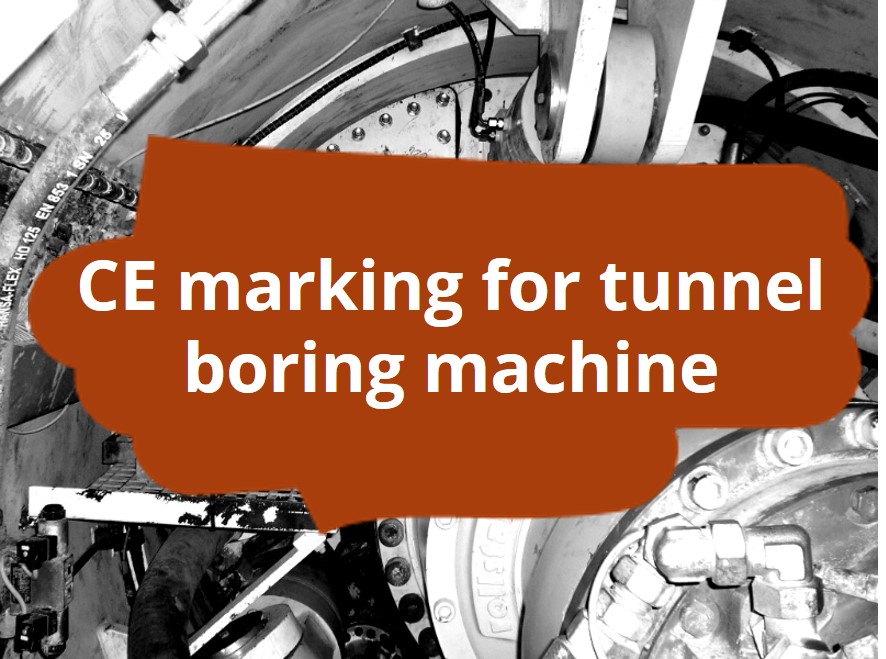
CE marking for a tunnel boring machine used in Australian copper mining
easyCE carries out the conformity assessment for a tunnel boring machine, including risk assessment across its lifecycle and preparation of a declaration of conformity ready to sign. The assessment focused on the new multi-arm cutting-head concept. The work also considered the applicable Australian safety and technical requirements, in close cooperation with the manufacturer and its Australian customer.
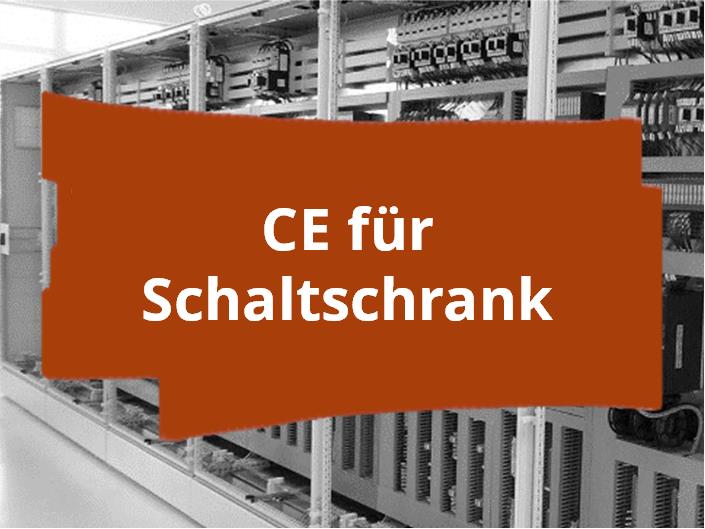
CE marking for control cabinets
easyCE supports the conformity assessment for control cabinets, including risk assessment and preparation of a declaration of conformity ready to sign. The assessment considered the Machinery, EMC and Low Voltage Directives, alongside DIN EN 60204-1:2019-06 and DIN EN IEC 61439-1:2021-10. The work also included a checklist to help select suppliers and components that meet the project's specific requirements.

CE marking for a mobile satellite communications system
easyCE supports the conformity assessment of a mobile satellite communications system, including risk assessment, EMC review and preparation of a declaration of conformity ready to sign. The system routes TCP/IP data redundantly through two or more satellite antennas. It is designed for rapid deployment where a mobile communications link is needed over long distances.
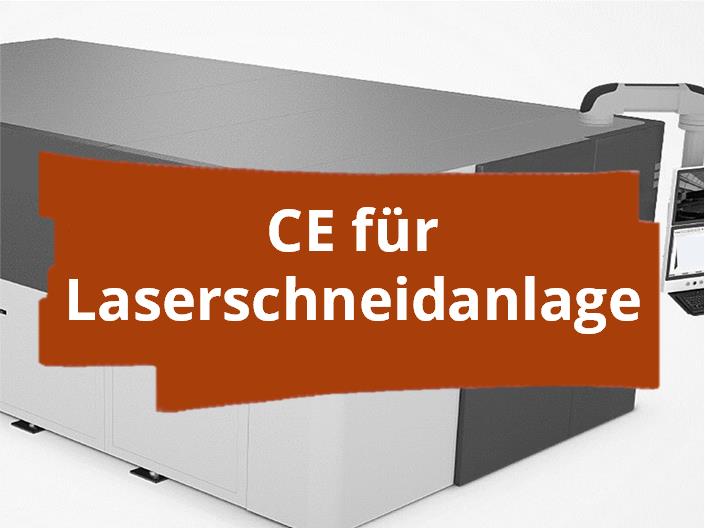
CE marking and declaration of conformity for a 2D laser cutting system
easyCE supports the full conformity assessment for a 2D laser cutting system with an automatic pallet changer. The work included coordinating the safety concept and two-beam light barrier, determining the performance level, analysing the product and carrying out a risk assessment in accordance with EN ISO 12100. Particular attention was needed for the cutting head's support structure and the movements of the pallet changer and cutting head. Laser protection screens, safety devices and a complete enclosure shield operators from the Class 4 laser cutting process inside the cabin, with Class 1 laser conditions outside the machine.
Your project in three steps
Step 1
Request expert opinion
Tell us about your product and request free initial advice. We identify the likely conformity requirements and the next steps for your project.
Step 2
Receive our offer
We explain the required assessments and documentation, then prepare a proposal for the scope you need. You can commission a complete project or individual tasks.
Step 3
We get it done
Your dedicated CE expert carries out the agreed engineering and documentation tasks and keeps you informed throughout the project. Follow-up questions can be discussed with the same expert.
Discuss your CE project
Product safety expertise

Willy Lebherz, Founder and Managing Director of easyCE
- Expert in product safety and conformity since 1995
- Recipient of the "Medal of the Order of Merit of the Federal Republic of Germany", awarded in 1983 by the then Federal President Carl Carstens
- Meister qualification in measurement and control technology
- Captain (ret.), Project Officer for Technical Logistics in the Army Material Office and Chief of the Telecommunications Repair Company
easyCE is an engineering consultancy specialising in product safety and conformity assessment. We help manufacturers, operators and suppliers assess products, reduce risks and prepare the documentation needed for market access. Our engineers identify applicable requirements, develop safety measures, prepare technical documentation and coordinate testing. You can commission the complete agreed process or selected tasks. Founded in southern Germany, easyCE works with clients internationally.
Technical expertise. Clear documentation. A defined route to conformity.